





Why Humidity Makes Your HVAC Maintenance Schedule Work Harder in Northeast Houston
How humidity changes your maintenance schedule is one of the most overlooked factors for homeowners in Northeast Houston — and understanding it can save your system from early breakdown.
Here's the short answer:
| Maintenance Task | Standard Schedule | High-Humidity Schedule |
|---|---|---|
| Air filter replacement | Every 1–3 months | Every 1–2 months |
| Condensate drain cleaning | Annually | Quarterly |
| Evaporator coil cleaning | Annually | Quarterly |
| Full professional tune-up | Once a year | Twice a year |
| Humidistat calibration check | As needed | Every season |
Houston's outdoor relative humidity regularly climbs above 70%. That means your HVAC system isn't just cooling your home — it's constantly pulling moisture out of the air. That extra workload adds up fast. Filters clog sooner. Drain lines back up more often. Coils stay wet longer, creating the perfect conditions for mold and corrosion.
If your system is running longer cycles, your energy bills are creeping up, or the air inside still feels clammy — humidity is likely the reason. The good news is that a few simple adjustments to your maintenance calendar can keep your system healthy and your home comfortable all year long.
Why High Moisture Levels Accelerate HVAC Wear and Tear
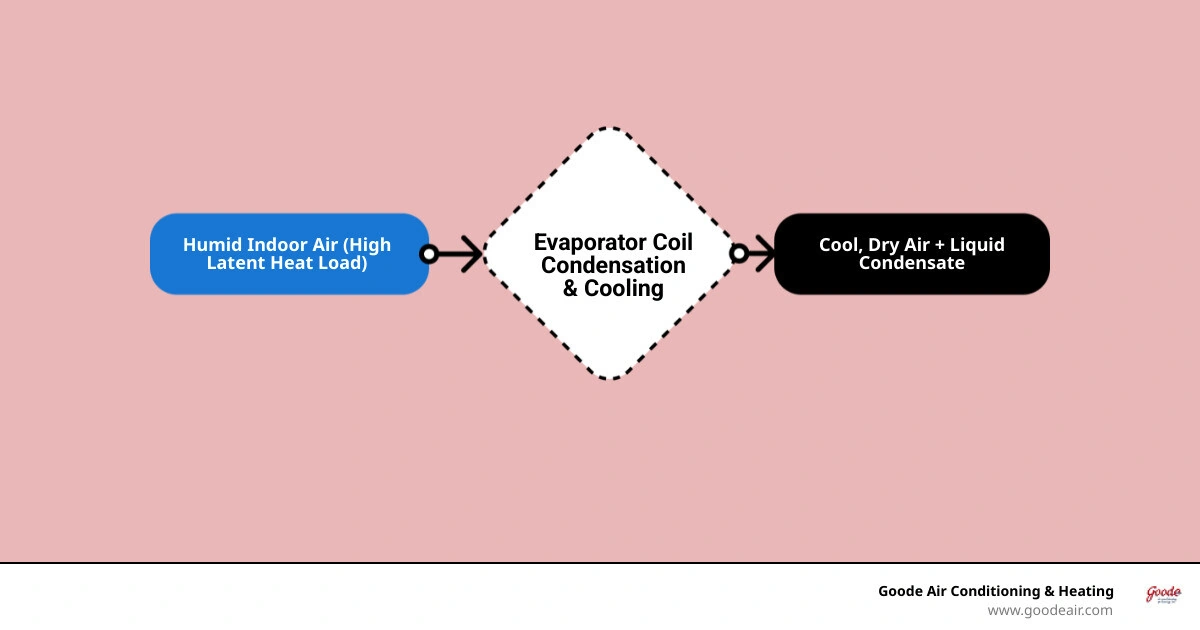
In Northeast Houston, we don't just deal with heat; we deal with "heavy" air. When the humidity is high, your air conditioner has to perform double duty. First, it has to remove the "latent heat" (the moisture) from the air before it can effectively lower the "sensible heat" (the actual temperature). This process places an immense amount of strain on several key components.
Compressor and Blower Motor Fatigue
The compressor is the heart of your AC. When humidity levels are high, the compressor must run for significantly longer cycles to reach your thermostat's set point. This constant operation leads to mechanical aging much faster than in drier climates. Similarly, the blower motor works harder to push air through coils that are often saturated with water. Over time, this leads to premature motor failure and increased energy consumption.
Electrical Component Corrosion
Moisture is the natural enemy of electrical systems. High indoor humidity can lead to condensation inside the cabinet of your HVAC unit. This moisture can cause corrosion on control boards, capacitors, and wiring connections. Corroded electrical contacts increase resistance, which generates more heat and can eventually lead to a total system short or failure.
Heat Transfer Efficiency
Your evaporator coil relies on clean, unobstructed surfaces to swap heat. In a humid environment, these coils are perpetually damp. This dampness acts like a magnet for dust and dander, creating a "muddy" layer on the fins. This layer insulates the coil, making it much harder for the refrigerant to absorb heat. As efficiency drops, your system runs longer, further accelerating the wear and tear.
Maintaining proper Humidity and Indoor Air Quality is not just about your comfort; it is a critical part of protecting your mechanical investment. Poorly managed moisture levels can shave years off the lifespan of your equipment, turning a 15-year system into a 10-year system. To keep your home healthy, you must prioritize your Indoor Air Quality through consistent, humidity-aware care.
How Humidity Changes Your Maintenance Schedule
Living in places like Humble, Kingwood, or Atascocita means we can't follow the "standard" maintenance advice found in national magazines. In our subtropical climate, the calendar needs to be much more aggressive.
A standard maintenance plan might suggest an annual checkup, but for us, how humidity changes your maintenance schedule usually means moving to a biannual or even quarterly mindset for certain tasks. Proactive component protection is the only way to combat the corrosive effects of the Texas Gulf Coast air.
If you are looking for HVAC Maintenance Kenswick TX, you likely already know that a "set it and forget it" attitude leads to water leaks and frozen coils. By adjusting your intervals, you ensure that moisture-related issues like algae growth and scale buildup are caught before they cause a midnight emergency.
Shortening the Filter Replacement Window: How Humidity Changes Your Maintenance Schedule
The general rule of thumb is to change your air filter every three months. In Northeast Houston, throw that rule out the window. During our humid seasons, we recommend a 1-2 month cycle.
Why? Because humid air makes particles "sticky." Dust, pet hair, and pollen bind together more easily when damp, clogging the pores of your filter much faster than dry dust would. Furthermore, a damp filter is a breeding ground for organic growth. If mold spores are captured on a moist filter, they can begin to colonize the media, eventually blowing spores into your ductwork.
Shortening this window provides several benefits:
- Prevention of organic growth: Frequent changes ensure mold doesn't have time to take root.
- Improved Airflow: A clean filter reduces the static pressure on your blower motor, saving energy.
- Better Filtration: High-MERV filters work best when they aren't overloaded.
For those interested in Whole Home Air Purification Benefits, even the most advanced purifier needs a clear path of airflow to be effective. Keeping those filters fresh is your first line of defense against dust mites and allergens that thrive in humid air.
Coil and Drain Line Diligence: How Humidity Changes Your Maintenance Schedule
The most common "humidity casualty" we see in the field is a clogged condensate drain line. As your AC removes gallons of water from your home daily, that water travels through a narrow PVC pipe. In our heat, that pipe becomes a perfect incubator for "algae blooms" and "zoogleal slime" — a thick, snot-like substance that can completely block the drain.
When we talk about how humidity changes your maintenance schedule, we are talking about moving drain line flushing from an "annual" task to a "quarterly" one. A quick flush with a safe cleaning solution can prevent a backup that might otherwise flood your attic or damage your ceiling.
Similarly, evaporator coil cleaning must be more diligent. In coastal or high-humidity areas, we often find that coils need a professional deep-clean twice as often. If you need AC Maintenance Eagle Springs TX, ensure your technician is specifically looking for sludge buildup in the condensate pan. Standing water in the pan is a major red flag for both system health and indoor air quality.
Seasonal Fluctuations: Summer vs. Winter Maintenance Approaches
Even in Texas, our maintenance needs shift as the calendar turns. While summer is all about fighting excess moisture, winter can bring the opposite challenge.
| Season | Primary Humidity Challenge | Key Maintenance Tasks |
|---|---|---|
| Summer | High RH (70%+) | Clean coils, flush drain lines, change filters monthly, check refrigerant charge. |
| Fall | Fluctuating RH | Inspect ductwork for mold, recalibrate humidistat, clear outdoor debris. |
| Winter | Low RH (below 30%) | Inspect Furnace Maintenance Valley Ranch TX, check humidifier pads, test sensors. |
| Spring | Rising RH | Deep clean condensate pan, test Heat Pump Maintenance Kingwood TX, prep for high loads. |
During the winter, if you have a whole-home humidifier, the maintenance focus shifts to scale prevention. Hard water minerals can quickly crust over humidifier pads or clog steam canisters. These should be inspected at the start of the season and replaced if you notice any white, chalky buildup.
Neglecting winter maintenance can lead to high static electricity and dry nasal passages, while neglecting the transition back to summer can result in a system that simply isn't ready for the "latent load" of a Houston June.
Red Flags: When Humidity Requires Immediate Professional Attention
Sometimes, the standard schedule isn't enough, and your home will start sending you SOS signals. If you notice any of the following, it’s time to call in the pros before a minor issue becomes a major replacement.
- Condensation on Vents: If you see water droplets forming on your supply registers, your system isn't dehumidifying properly, or you have a duct leak pulling in humid attic air.
- Musty Odors: That "dirty sock" smell is a classic sign of mold or bacterial growth on your coils or inside your ductwork.
- Foggy Windows: If your windows are fogging up on the inside while the AC is running, your indoor relative humidity is likely well above the safe 60% threshold.
- Frozen Evaporator Coils: It seems counterintuitive, but high humidity combined with a dirty filter or low refrigerant can cause your coils to turn into a block of ice.
- Clammy Indoor Air: If the thermostat says 72 degrees but you feel sticky and uncomfortable, the system is failing to manage the moisture load.
Addressing these signs early is a key part of HVAC Maintenance for Maximum Energy Savings. A system struggling with humidity uses significantly more power to achieve the same level of comfort.
Integrating Smart Technology and Whole-Home Control
In 2026, we have better tools than ever to manage how humidity changes your maintenance schedule. Smart home technology allows us to move away from guesswork and toward data-driven maintenance.
Whole-Home Dehumidifiers
For many homes in Huffman or Crosby, the AC unit alone isn't enough to keep up with the Gulf Coast moisture. A whole-home dehumidifier works alongside your HVAC system to pull moisture out of the air even when the cooling cycle isn't running. This reduces the "short-cycling" that often happens when an AC tries to fix humidity issues, extending the life of your compressor. If you're interested, we specialize in Whole-house Dehumidifier Installation Huffman TX.
Smart Thermostats and Humidistats
Modern thermostats do more than just monitor temperature. They can track indoor humidity levels in real-time and alert you when levels exceed 60%. Some advanced systems can even slow down the blower motor (if you have a variable-speed system) to allow the air to spend more time on the cold coils, pulling out more moisture per cycle.
Remote Monitoring
We can now install sensors that monitor the "health" of your drain line and coils. These sensors can send an alert to your phone (and ours!) the moment a clog begins to form, allowing us to perform maintenance before the water overflows.
Frequently Asked Questions about Humidity and HVAC Maintenance
What is the ideal indoor humidity level for HVAC health?
For both your comfort and your system's longevity, you should aim for a relative humidity (RH) range of 30% to 50%. According to ASHRAE standards, staying below 60% is critical for preventing mold growth and protecting the structural integrity of your home (like preventing wood floors from warping).
Can high humidity cause my AC coils to freeze?
Yes! It sounds strange, but if the humidity is very high and your airflow is restricted (by a dirty filter, for example), the moisture on the coils can freeze before it has a chance to drain away. Once a thin layer of ice forms, it acts as an insulator, causing the entire coil to eventually freeze into a solid block. If this happens, turn the system off and call for professional service immediately.
How often should I clean my condensate drain line in a humid climate?
In Northeast Houston, we recommend a professional flush every six months, but you should do a visual inspection and a DIY vinegar flush every quarter during the peak cooling season. This prevents the "sludge" that causes most emergency water damage calls.
Conclusion
At Goode Air Conditioning & Heating, we’ve spent 50 years learning the quirks of the Northeast Houston climate. We know that a one-size-fits-all maintenance plan doesn't work when you're dealing with the humidity of the Texas Gulf Coast. Whether you are in Kingwood, Porter, or Summerwood, our family-owned team is dedicated to keeping your air dry, cool, and clean.
Don't let the Houston humidity dictate the lifespan of your HVAC system. With our transparent pricing and 100% satisfaction guarantee, we make it easy to stay ahead of the moisture. Schedule your professional AC maintenance today and let us help you adjust your calendar for a more comfortable, efficient home.

Customer Testimonials
See why so many homeowners trust Goode Air Conditioning & Heating, Inc.—our 4.8-star Google rating and hundreds of happy customers speak to the quality, care, and service we deliver every day.

The technician Goode AC is one of the best businesses I know of. I have had their annual maintenance check up for several years. I’m so impressed with the technician who has serviced my AC several times. Always on time, pleasant, considerate, thorough in his work and explains the problems where I can easily understand. Thankful for doing business with professionals.
I have been a customer for at least 30 years. They have replaced 3 air conditioners, a furnace and heat exchanger. Today they replaced the air ducts in my attic that were falling apart and never been cleaned. Wonderful job, polite workers, great clean up. I can already tell the difference in the quality of the air. Love you guys!!
Great experience today with Goode Air Conditioning. Hoger, our technician, was very knowledgeable and provided excellent customer service. We look forward to our Spring maintenance visit.
I have used Goode Air Conditioning and Heating for many years. The company has excellent customer service and the technicians are knowledgeable, thorough and professional.