






Ductless Mini Split Systems Explained: What Every Houston Homeowner Should Know
Ductless mini split systems explained simply: they are heating and cooling systems that work without any ductwork, using a small outdoor unit connected to one or more indoor units through a narrow conduit to deliver zoned comfort directly into each room.
Here is a quick breakdown of the basics:
- What they are: A two-part system — one outdoor compressor and one or more indoor air handlers
- How they work: Refrigerant moves heat between the outdoor and indoor units to cool or warm a room
- What makes them different: No ducts, no duct energy loss, and individual room control
- Who they are best for: Homes without existing ductwork, room additions, garages, sunrooms, and older homes in Northeast Houston
- Key benefit: Up to 20–30% more efficient than traditional ducted systems, with some models reaching 35 SEER2
If you live in Northeast Houston, you already know how punishing the heat and humidity can be. A system that works harder, wastes less energy, and lets you control comfort room by room is a big deal — especially when high energy bills are already a pain point.
Ductless mini splits have moved from a niche product to a mainstream solution, and for good reason. Originally introduced in Japan in 1959, they are now one of the fastest-growing HVAC options in the U.S. Whether you are dealing with an uncomfortable back bedroom, a sweltering garage, or a home with no duct system at all, a mini split may be exactly what you need.
This guide covers everything — how they work, what they cost to run, the types available, how to maintain them, and whether one is right for your home.
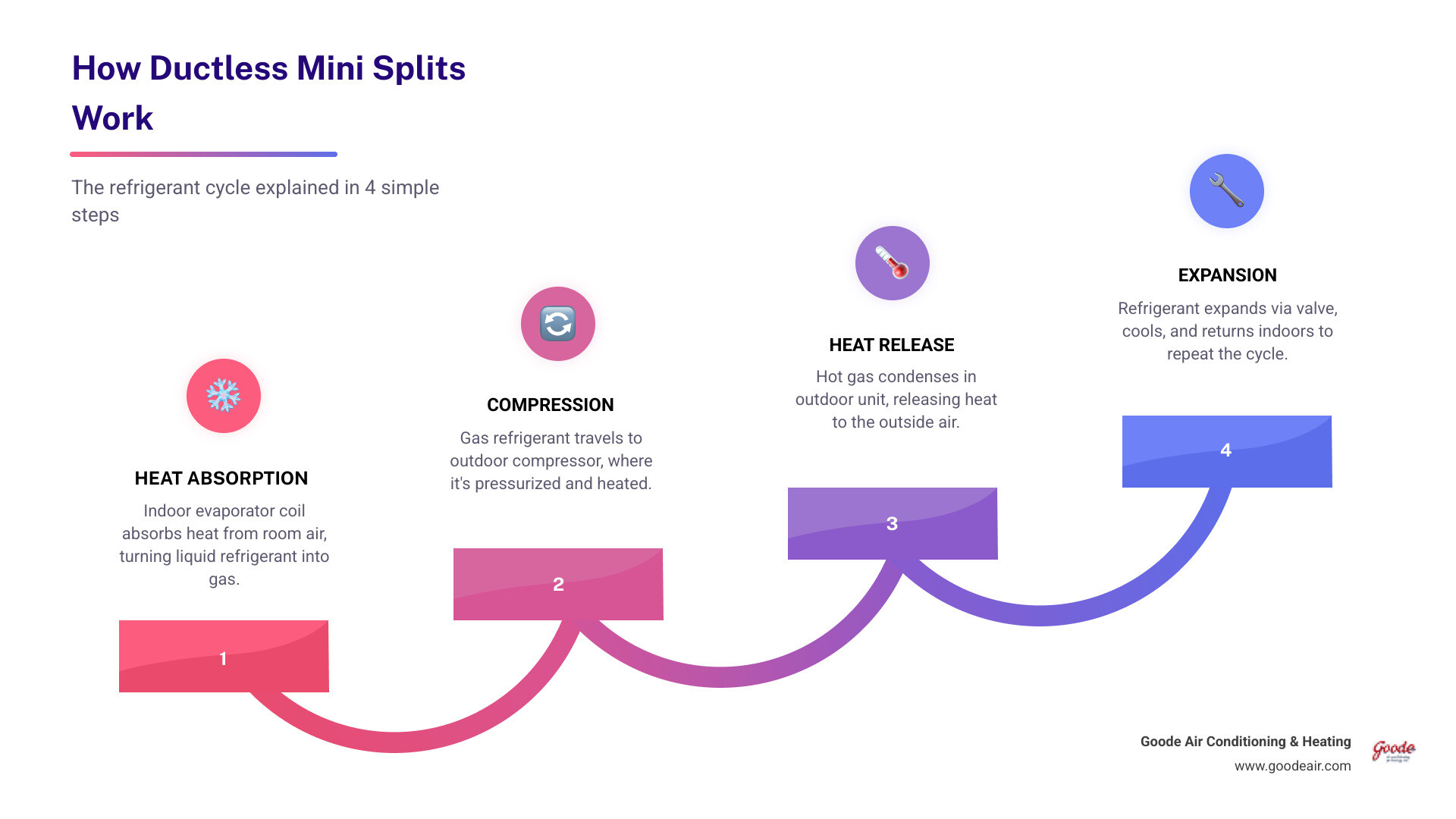
Ductless Mini Split Systems Explained: How They Work
To understand how these systems operate, think of them as a "split" system because the components are divided between the inside and outside of your home. Unlike a window unit that sits in the frame and makes a lot of noise, a mini split separates the loud parts (the compressor) from the quiet parts (the air handler).
Most modern mini splits utilize heat pump technology. This is a bit of a misnomer in Houston because we mostly think about cooling, but a heat pump is essentially an air conditioner that can run in reverse. In the summer, it pulls heat out of your room and dumps it outside. In our brief Texas winters, it can actually find heat energy in the outdoor air—even when it feels chilly to us—and move it into your home.
The magic happens via the refrigerant cycle. A chemical refrigerant circulates through copper tubing between the outdoor compressor and the indoor unit. As it changes from liquid to gas and back again, it absorbs and releases heat. Because this happens through a small "line set" rather than bulky metal ducts, there is nowhere for the treated air to leak out.
The connection between the two units is made through a conduit. This bundle includes the power cable, refrigerant tubing, and a condensate drain line. For homeowners looking for a Mini-Split AC Installation Guide Kingwood, the most attractive feature is often that this conduit only requires a small, three-inch hole in the exterior wall.
The Core Components of a Mini-Split
Every system relies on five primary parts to keep you comfortable:
- Evaporator Coil: Located inside the indoor unit, this is where the refrigerant absorbs heat from your indoor air.
- Condensing Unit: The large box outside that houses the compressor. It "squeezes" the heat out of the refrigerant and releases it into the outdoor air.
- Expansion Valve: This component controls the flow of refrigerant, acting like a nozzle to regulate temperature and pressure.
- Refrigerant Lines: These are the copper tubes that act as the highway for the cooling medium.
- Condensate Drain: As the system cools the air, it also removes humidity (a must in places like Humble and Atascocita!). This moisture turns into water droplets that are safely funneled outside through a small drain tube.
Comparing Single-Zone and Multi-Zone Configurations
One of the best ways to have ductless mini split systems explained is through the lens of "zoning."
A single-zone system consists of one outdoor unit connected to one indoor head. This is the perfect solution for a "problem room"—that one bedroom at the end of the hall that never stays cool, or a newly converted garage workshop.
A multi-zone system allows you to connect multiple indoor units to a single, powerful outdoor compressor. Depending on the brand and model, you can often connect up to five or even eight indoor units to one outdoor unit. This allows for:
- Individual Thermostats: Each room has its own remote or wall controller. If you like your bedroom at 68 degrees but want the guest room at 74, you can do that without affecting the rest of the house.
- Independent Control: You only pay to cool the rooms you are actually using. If you spend all day in the home office, you can turn off the units in the bedrooms to save energy.
- Scalability: You can often start with a few indoor units and add more later as your needs (or budget) grow, provided your outdoor unit has the capacity.
For many families, a Ductless AC System Atascocita provides the flexibility that a traditional central system simply cannot match.
Indoor Unit Styles for Every Room
You aren't stuck with just one look. While the high-wall unit is the most common, there are several styles to fit your home's aesthetic:
- Wall-Mounted: The standard "head" that sits high on the wall. They are the most cost-effective and easiest to install.
- Ceiling Cassettes: These are recessed into the ceiling, leaving only a sleek grille visible. They are great for open-concept living areas because they distribute air in four directions.
- Floor Consoles: These sit low on the wall, similar to a radiator. They are ideal for rooms with lots of windows or slanted ceilings where wall space is limited.
- Slim-Ducted: These are "hidden" units that can be installed in a closet or attic space, using a very short run of ductwork to vents in the ceiling. This gives you the look of central air with the efficiency of a mini split.
Benefits of Having Ductless Mini Split Systems Explained
Why are so many people in Spring and Kingwood switching? It usually comes down to three things: efficiency, quiet, and air quality.
Energy Efficiency & SEER2 Ratings: Traditional central air systems lose a massive amount of energy through the ductwork. In fact, research shows that duct leakage can account for more than 30% of energy consumption for air conditioning. Because mini splits don't use ducts, they have zero duct loss. Furthermore, they use "inverter" technology, which works like cruise control for your AC. Instead of turning fully on and fully off (which wastes power), the system speeds up or slows down to maintain a steady temperature. This leads to efficiency ratings as high as 35 SEER2.
Quiet Operation:If you've ever been startled by the "thump" of a central AC kicking on or the "pinging" of metal ducts expanding, you'll love a Mini-Split AC Spring. Indoor units often operate as quietly as 19 decibels—that's quieter than a whisper or rustling leaves. Even the outdoor units are impressively quiet, often operating at around 46 decibels, which is the level of a normal conversation.
Improved Air Quality:Central ducts are notorious for collecting dust, pet dander, and even mold over time. Every time the air blows, those particles are recirculated. Ductless units feature multi-stage filtration systems in each head. Since there are no ducts to get dirty, the air stays cleaner. Plus, because each room is its own "zone," you don't get cross-contamination of smells or allergens from the kitchen to the bedroom.
Ideal Applications for Ductless Mini Split Systems Explained
While a mini split can cool an entire home, there are specific scenarios where they are the absolute best choice:
- Home Additions: If you're adding a sunroom or a "mother-in-law" suite, a mini split is often cheaper than trying to upsize your central AC and run new ductwork.
- Garages and Workshops: In many areas, it is actually against code to run home ductwork into a garage because of the risk of pulling car exhaust into the living space. A Mini Ductless AC TX is the safe, legal way to turn your garage into a gym or man cave.
- Older Homes: Many historic homes in our area were built before central AC existed. They often lack the closet or attic space for bulky ducts. Mini splits allow these homes to have modern comfort without destroying the architectural charm.
- Master Suites: If your bedroom is always the warmest room in the house, a small single-zone unit can provide that extra "boost" of cooling you need for a good night's sleep.
Installation and Maintenance Best Practices
Installation is much faster than traditional systems—often completed in a single day—but it requires precision.
Professional Sizing is Critical:You can't just pick a unit off the shelf based on the box. If a unit is too small, it will run constantly and wear out. If it's too large, it will "short cycle," turning on and off so fast that it never has a chance to dehumidify the air. We use specialized calculations to ensure your unit is perfectly matched to the square footage, insulation, and window placement of your room.
The Installation Process:Your technician will mount the indoor unit, drill a small three-inch hole for the conduit, and secure the outdoor unit on a pad or wall bracket. They then "charge" the system with refrigerant and test the drainage. It’s a clean process that doesn't involve tearing up your drywall or ceilings.
Maintenance for Longevity:To keep your system running at peak efficiency, you should:
- Clean the Filters: Most units have a washable filter you can slide out and rinse in the sink. We recommend doing this every month, especially if you have pets.
- Clear the Outdoor Unit: Make sure leaves, dirt, or weeds aren't blocking the airflow around the outdoor compressor.
- Schedule Annual Tune-Ups: Just like a car, a mini split needs a professional eye once a year. We check refrigerant levels, clean the coils, and ensure the condensate drain is clear to prevent leaks. For neighbors in the area, our Mini-Split Service Humble ensures your system stays in top shape year-round.
Smart Features and Modern Controls
Today’s ductless mini split systems explained wouldn't be complete without mentioning the tech. Most modern units come with:
- Smartphone Apps: You can turn on the AC in your living room while you're still driving home from work.
- Occupancy Sensors: Some high-end models feature "3D-i-See" sensors that detect where people are in the room. They can direct airflow toward you for immediate comfort or away from you to avoid a draft. They can even power down if they detect the room is empty!
- Wi-Fi Integration: Connect your system to Amazon Alexa or Google Home for voice-controlled comfort.
Frequently Asked Questions about Ductless HVAC
Do mini splits provide both heating and cooling?
Yes! Most units sold in Texas are "heat pumps." They provide high-efficiency cooling in the summer and can reverse the cycle to provide heat in the winter. Because they move heat rather than creating it (like an electric furnace does), they are incredibly energy-efficient for heating.
How long do ductless systems typically last?
With proper installation and regular maintenance, you can expect a high-quality ductless system to last between 15 and 20 years. This is comparable to, and often longer than, traditional central air systems because the units don't have to work as hard to push air through miles of ductwork.
Can I install a mini split myself?
While you might see "DIY kits" online, we strongly advise against it. Installing a mini split involves handling high-voltage electricity and pressurized refrigerant, which requires a specialized license. Furthermore, most manufacturers will void your warranty if the system isn't installed by a certified professional. A pro ensures the lines are vacuum-sealed and leak-tested, which is the difference between a system that lasts 20 years and one that fails in two.
Conclusion
Whether you are looking to save on your monthly energy bills, solve a comfort issue in a specific room, or find a cooling solution for a home without ducts, ductless technology is a game-changer. By having ductless mini split systems explained, you can see why they are the "Swiss Army Knife" of the HVAC world—versatile, efficient, and incredibly quiet.
At Goode Air Conditioning & Heating, we’ve spent the last 50 years serving our neighbors in Northeast Houston, from Kingwood to Crosby and everywhere in between. As a family-owned business, we believe in transparent pricing, expert craftsmanship, and a 100% satisfaction guarantee.
If you're ready to experience a new level of home comfort, check out our Mini Splits service page or give us a call. We'd love to help you design the perfect zoned system for your home!

Customer Testimonials
See why so many homeowners trust Goode Air Conditioning & Heating, Inc.—our 4.8-star Google rating and hundreds of happy customers speak to the quality, care, and service we deliver every day.

The technician Goode AC is one of the best businesses I know of. I have had their annual maintenance check up for several years. I’m so impressed with the technician who has serviced my AC several times. Always on time, pleasant, considerate, thorough in his work and explains the problems where I can easily understand. Thankful for doing business with professionals.
I have been a customer for at least 30 years. They have replaced 3 air conditioners, a furnace and heat exchanger. Today they replaced the air ducts in my attic that were falling apart and never been cleaned. Wonderful job, polite workers, great clean up. I can already tell the difference in the quality of the air. Love you guys!!
Great experience today with Goode Air Conditioning. Hoger, our technician, was very knowledgeable and provided excellent customer service. We look forward to our Spring maintenance visit.
I have used Goode Air Conditioning and Heating for many years. The company has excellent customer service and the technicians are knowledgeable, thorough and professional.