





Why AC Units Wear Out Faster in the Gulf Coast (And What It Means for Your Home)
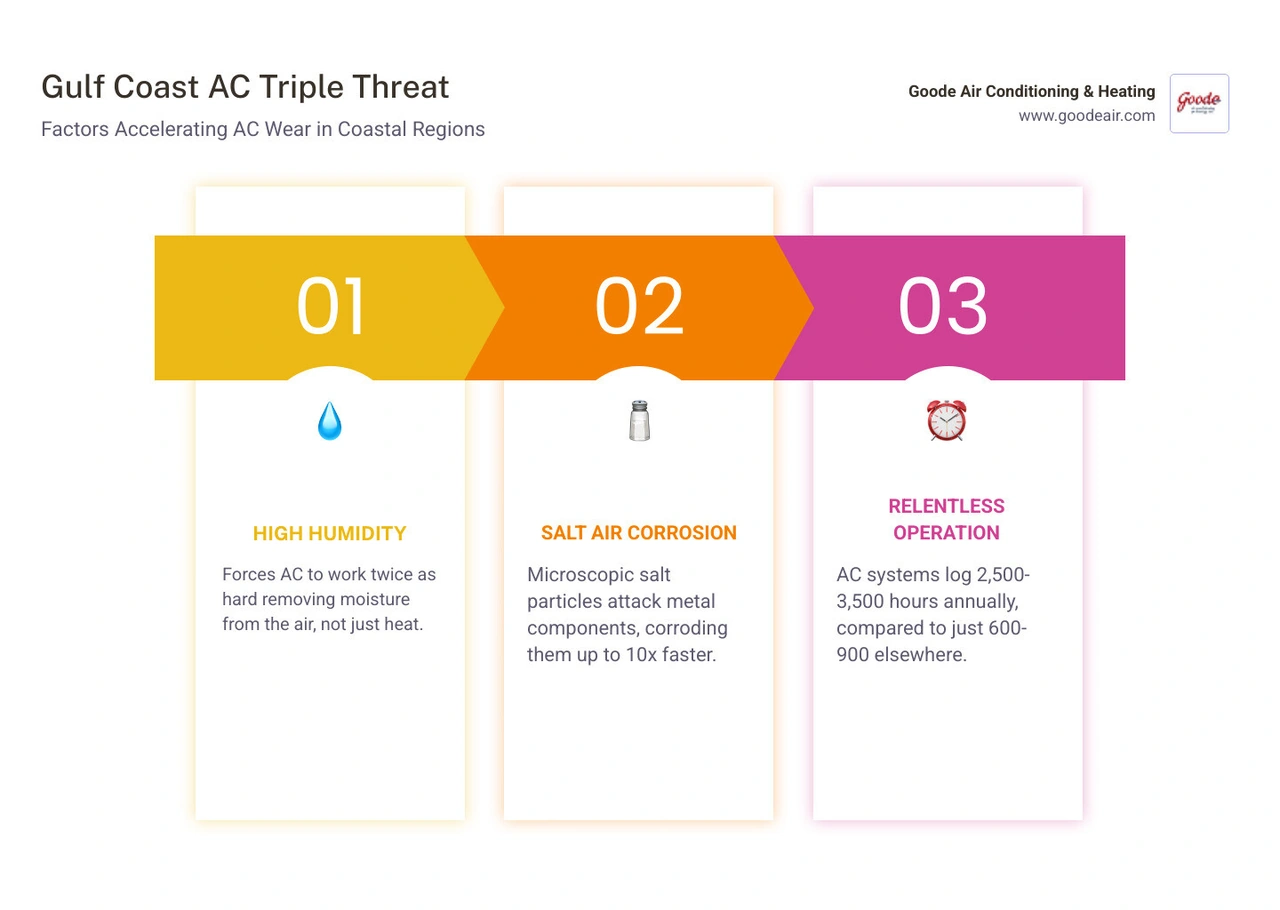
Why do ac units wear out faster in the gulf coast comes down to three relentless environmental forces working against your system every single day:
- High humidity - forces your AC to work twice as hard removing moisture from the air, not just heat
- Salt air corrosion - microscopic salt particles attack metal components, causing metals to corrode up to ten times faster than normal
- Year-round operation - Gulf Coast AC systems log 2,500 to 3,500 hours of runtime per year, compared to just 600 to 900 hours in northern states
The result? While a northern system might last 15 to 20 years, AC units in Gulf Coast regions like Northeast Houston frequently reach end of life in 10 to 15 years — and systems very close to the water can fail in as little as 8 to 12 years.
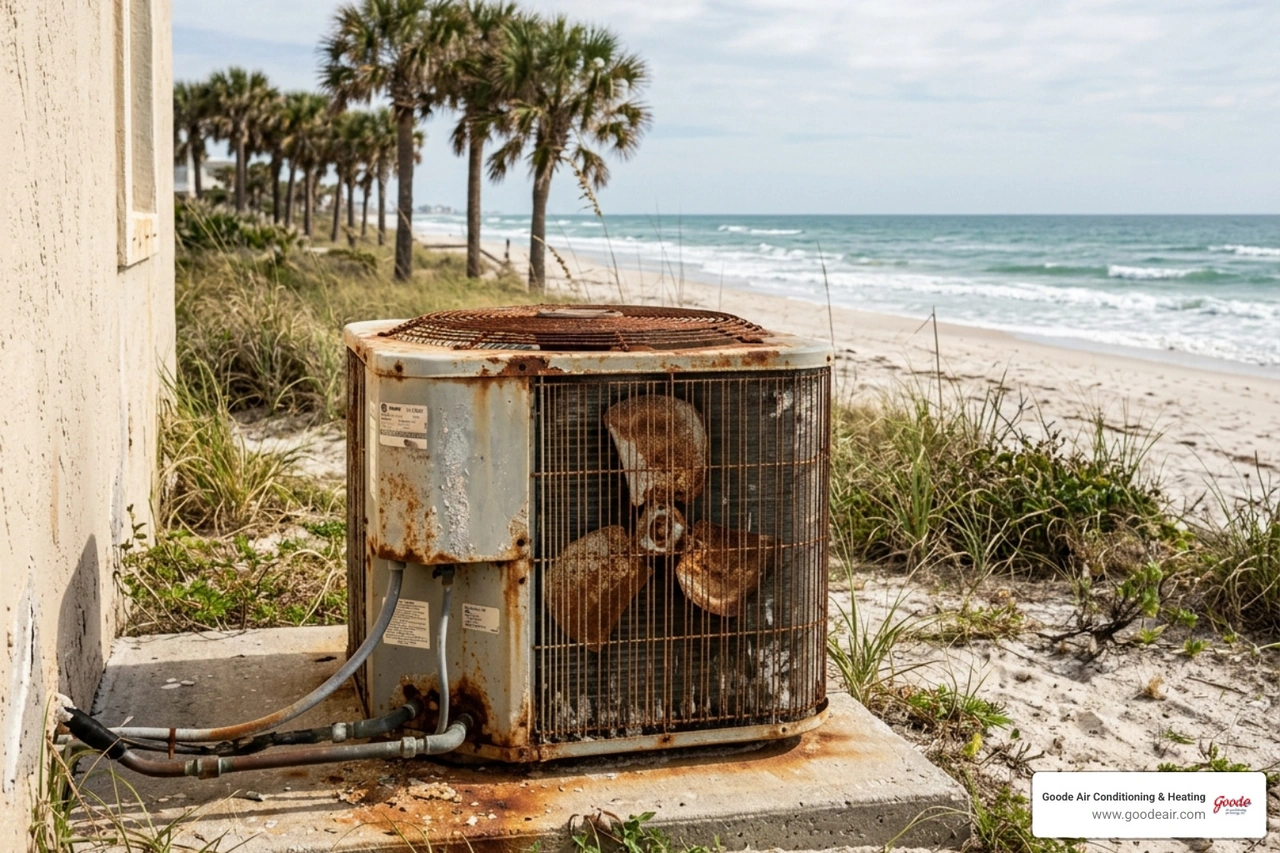
If you've noticed your energy bills creeping up, your home feeling sticky even when the AC is running, or visible rust on your outdoor unit, your system may already be showing the strain. That soft coastal breeze feels great on your skin, but behind the scenes, it's quietly wearing down your air conditioner one humid, salty day at a time.
Why Do AC Units Wear Out Faster in the Gulf Coast?
Living in Northeast Houston—from the quiet streets of Roman Forest to the bustling neighborhoods of Atascocita—we enjoy the benefits of coastal proximity. But for our HVAC systems, this environment is a literal battlefield. When we ask why do ac units wear out faster in the gulf coast, the primary culprit is a chemical process that never sleeps.
Chemical oxidation and galvanic corrosion are the "silent killers" of air conditioners in our region. Your outdoor condenser unit is primarily made of copper and aluminum. When salt-laden air from the Gulf meets these metals, it creates an electrochemical reaction. Salt is hygroscopic, meaning it actively attracts moisture from our 80% humidity mornings. This creates a persistent "salty film" on your unit’s delicate aluminum fins and copper coils.
Over time, this leads to metal pitting. You might notice the thin aluminum fins on your outdoor unit starting to look brittle or even turning into a white, powdery substance. This isn't just a cosmetic issue; it’s a structural failure. As the metal pits and thins, the system loses its ability to transfer heat efficiently. Eventually, this corrosion leads to microscopic refrigerant leaks. Once your system begins losing refrigerant, the compressor—the "heart" of your AC—has to work much harder to achieve the same cooling effect, leading to a premature heart attack for your HVAC system.
If you are already seeing these signs in neighborhoods like Kingwood or Eagle Springs, it’s vital to consult a professional before a small leak turns into a total system collapse. For more details on identifying these early failures, check out our AC Repair Kingwood TX Complete Guide.
How Humidity Makes AC Units Wear Out Faster in the Gulf Coast
In Houston, we don’t just have "weather"; we have a "warm, wet blanket" that sits over the city for nine months of the year. To understand why do ac units wear out faster in the gulf coast, we have to look at the science of "latent heat."
Most people think an AC only cools the air temperature (sensible heat). However, in the Gulf Coast, your AC spends more than 50% of its cooling capacity simply "drying" the air (latent heat). Before the air can feel truly cool, the system must wring out gallons of water every single day. This puts an immense strain on the evaporator coils and the blower motor.
Moist air is physically denser and heavier than dry air. This means your blower motor has to work significantly harder to push that heavy, humid air through your ductwork. It’s like the difference between running through a hallway and running through a swimming pool. This constant resistance leads to blower motor fatigue and electrical component failure much earlier than in drier climates. Furthermore, if the humidity isn't managed correctly, moisture can linger in the drain pans and ducts, leading to biological growth that further restricts airflow and forces the system to run longer cycles just to keep up.
Maintaining your system's ability to handle this moisture is the key to lower bills. Learn more about how to keep your system efficient in our guide on HVAC Maintenance for Maximum Energy Savings.
Why Salt Air Causes AC Units to Wear Out Faster in the Gulf Coast
You don’t have to live directly on the beach in Galveston to feel the effects of salt air. In areas like Humble, Porter, and New Caney, onshore breezes carry microscopic sodium chloride particles miles inland. These particles are incredibly abrasive and corrosive.
When salt settles on your outdoor unit, it creates a "bridge" between different types of metals—usually the aluminum fins and the copper tubing. This triggers galvanic corrosion, where one metal literally "sacrifices" itself to the other. This process eats away at the joints where the coils meet the chassis, often causing electrical shorts in the contactors and capacitors.
Salt air also creates a layer of insulation on top of the coils. Instead of releasing heat into the atmosphere, the heat gets trapped by the salt crust. This causes the system to run at higher internal temperatures and pressures, which is a recipe for a shortened lifespan. When choosing a system for this environment, many homeowners are now looking at heat pumps as a robust alternative. You can compare the options in our article on Heat Pump vs AC Texas Cost Comfort.
The Relentless Workload: Usage Hours vs. System Longevity
The most straightforward reason why do ac units wear out faster in the gulf coast is simply that we use them more. In the northern states, an AC unit is a seasonal luxury used for a few months. In Northeast Houston, it’s a life-support system used nearly year-round.
As of April 2026, we are seeing systems in Valley Ranch and Fall Creek logging hours that would make a northern HVAC unit shudder. To put this in perspective, look at the sheer volume of work your system does compared to a unit in a cooler climate:
| Feature | Northern State (e.g., Ohio) | Gulf Coast (e.g., Texas) |
|---|---|---|
| Annual Runtime | 600 – 900 Hours | 2,500 – 3,500 Hours |
| Primary Task | Reducing Temperature | Temperature + Dehumidification |
| Idle Period | 6 – 8 Months | 1 – 2 Months (Maybe) |
| Equivalent Aging | 1 Year = 1 Year | 1 Year = 3 Years |
| Expected Lifespan | 18 – 20 Years | 10 – 15 Years |
A system in Summerwood or Huffman accumulates the equivalent of 15 years of "northern usage" in roughly 5 to 6 years. This mechanical fatigue affects every moving part, from the fan bearings to the compressor valves. By the time a Houston AC is 10 years old, it has likely "lived" longer than a 25-year-old unit in Maine. This constant thermal stress—expanding and contracting as it cycles on and off in the 100-degree heat—eventually leads to metal fatigue and electrical failure.
With the 2026 efficiency standards now in full effect, older units are also costing homeowners significantly more in utility bills as their performance slides. Upgrading to modern technology can offset these costs. Check out our insights on Texas Heat Pumps Energy Savings to see how newer systems handle the workload more efficiently.
Proactive Strategies to Extend Coastal HVAC Lifespan
While the environment is tough, your AC’s early retirement isn't inevitable. We have helped families from Crosby to Spring keep their systems running strong by following a few "coastal-specific" rules.
- The Monthly Rinse: One of the simplest things you can do is take a garden hose and gently rinse your outdoor condenser unit once a month. This washes away the salt and sulfur deposits before they can "set" and begin the corrosion process. Warning: Use low pressure only! High pressure can bend the delicate aluminum fins and cause more harm than good.
- Protective Coatings: When installing a new unit, or during a deep-clean service, we often recommend specialized anti-corrosion coatings (like epoxy or specialized coastal films). these coatings provide a barrier between the metal and the salt air, potentially adding 3 to 5 years to your system's life.
- High-Frequency Filter Changes: Because our humidity makes dust "sticky," air filters clog faster here than anywhere else. We recommend checking your filters every 30 days. A clogged filter restricts airflow, which is the fastest way to overheat a compressor in the Texas summer.
- Whole-Home Dehumidifiers: By installing a dedicated dehumidifier, you take the "latent heat" load off your AC. This allows the AC to focus solely on temperature, which reduces its runtime and mechanical wear.
- Surge Protection: Coastal storms in the Gulf bring frequent power fluctuations. A dedicated HVAC surge protector can save your system’s expensive control boards from being fried during a Summerwood thunderstorm.
To understand the mechanics of how these modern systems protect themselves, read our guide on Heat Pump Technology Principles Texas.
Frequently Asked Questions about Coastal AC Failure
How long does an AC unit typically last near the ocean?
While the national average is 15 to 20 years, in our part of Texas, the realistic lifespan is 10 to 15 years. If your home is within a few miles of the coast or a large salt-water body like Lake Houston, you might see that number drop to 8 to 12 years if the system isn't meticulously maintained. Regular professional cleaning is the only way to push toward that 15-year mark.
What are the warning signs of salt air corrosion?
Keep an eye out for "white rust"—a powdery substance on the aluminum fins. Other signs include visible flaking of the metal, a "pitting" appearance on copper lines, and a noticeable decrease in cooling efficiency. If your utility bills are rising but your usage hasn't changed, it’s often because corrosion is preventing the coils from releasing heat, forcing the system to run longer.
When is the best time to schedule coastal AC maintenance?
March is the magic month. In the Gulf Coast, our "peak season" starts early. By scheduling an inspection in March, we can catch the early signs of salt corrosion, clear out any debris from winter storms, and ensure your refrigerant levels are perfect before the first 90-degree day hits in April or May. We also recommend a second "check-up" in the fall to clear out the dust and grime accumulated during the brutal summer months.
Conclusion
The Gulf Coast environment is undeniably beautiful, but it is undeniably "hard" on your home’s most expensive appliance. Understanding why do ac units wear out faster in the gulf coast is the first step in protecting your investment. Between the salt, the humidity, and the sheer number of hours our systems must run, proactive care isn't just a suggestion—it’s a necessity.
At Goode Air Conditioning & Heating, we’ve spent the last 50 years serving our neighbors in Northeast Houston. We understand the unique "salty truth" of living in places like Kingwood, Atascocita, and Humble. Our family-owned business is built on values of transparency and a 100% satisfaction guarantee. We don't just fix air conditioners; we provide long-term comfort solutions tailored to the Texas climate.
Don't let the Gulf Coast weather get the best of your system. Whether you need a deep-cleaning "salt-wash," a protective coating application, or a consultation on a new, coastal-ready high-efficiency unit, we are here to help.
Schedule your professional Gulf Coast AC service today with Goode Air Conditioning & Heating

Customer Testimonials
See why so many homeowners trust Goode Air Conditioning & Heating, Inc.—our 4.8-star Google rating and hundreds of happy customers speak to the quality, care, and service we deliver every day.

The technician Goode AC is one of the best businesses I know of. I have had their annual maintenance check up for several years. I’m so impressed with the technician who has serviced my AC several times. Always on time, pleasant, considerate, thorough in his work and explains the problems where I can easily understand. Thankful for doing business with professionals.
I have been a customer for at least 30 years. They have replaced 3 air conditioners, a furnace and heat exchanger. Today they replaced the air ducts in my attic that were falling apart and never been cleaned. Wonderful job, polite workers, great clean up. I can already tell the difference in the quality of the air. Love you guys!!
Great experience today with Goode Air Conditioning. Hoger, our technician, was very knowledgeable and provided excellent customer service. We look forward to our Spring maintenance visit.
I have used Goode Air Conditioning and Heating for many years. The company has excellent customer service and the technicians are knowledgeable, thorough and professional.