





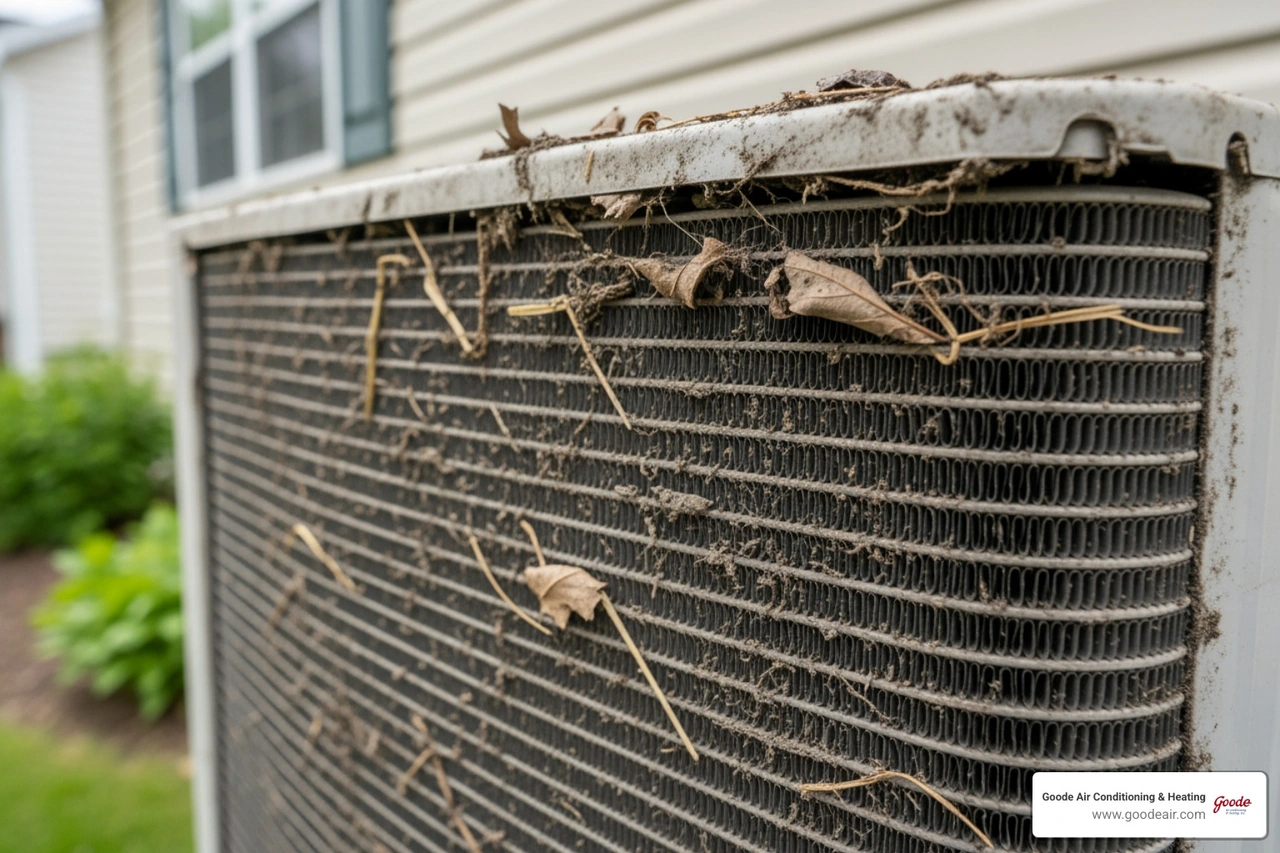
Why the Dirty Condenser Coil and Performance Connection Is Costing You More Than You Think
The dirty condenser coil and performance connection is one of the most overlooked reasons homeowners in Northeast Houston end up with sky-high energy bills and an AC that just can't keep up — even when everything else seems fine.
Here's the short answer if you need it fast:
How a dirty condenser coil hurts your AC performance:
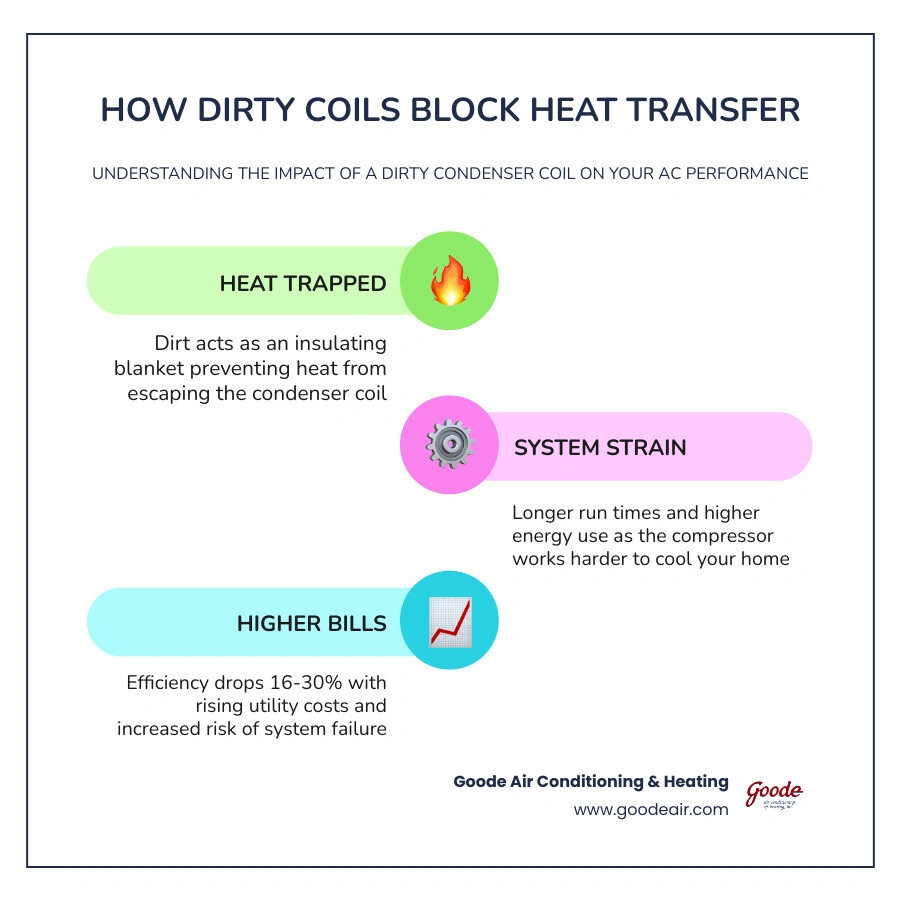
- Blocks heat release — dirt acts like an insulating blanket, trapping heat that should be expelled outside
- Forces longer run times — your system works harder and runs more to reach the same temperature
- Spikes energy costs — efficiency can drop by 16% to 30%, showing up directly on your utility bill
- Strains the compressor — the most expensive part of your system takes the hardest hit
- Shortens system lifespan — a well-maintained system lasts 10–15 years; a neglected one may fail in 7–8
This guide walks you through exactly how to fix a dirty condenser coil without stress — and how to keep it clean so your system runs the way it should.
In Houston's heat and humidity, coil fouling happens faster than most homeowners expect. Pollen, grass clippings, cottonwood fuzz, and sticky humidity combine to form a thick layer of grime on your outdoor unit's fins. That grime doesn't just look bad — it physically blocks the heat transfer your AC depends on to cool your home. When heat can't escape outside, the entire refrigerant cycle suffers, your compressor works overtime, and your electric bill climbs.
The good news? This is one of the most preventable AC problems there is.
Understanding the Dirty Condenser Coil and Performance Connection
To understand why a little bit of dirt is such a big deal, we have to look at how your air conditioner actually works. Your AC doesn't "create" cold; it removes heat from your home and dumps it outside. This happens through a continuous refrigerant cycle.
The indoor evaporator coil absorbs heat from your rooms, and the refrigerant carries that heat to the outdoor condenser coil. The outdoor unit’s job is to release that heat into the air. When the condenser coil is clean, the aluminum fins allow heat to dissipate quickly. However, when those fins are coated in dirt, it creates a "thermal blanket."
This insulation layer forces the system to operate at higher pressures and temperatures to force the heat through the grime. When system pressures rise, every component has to work harder, leading to a massive drop in efficiency. For more on how to keep your system running at peak levels, check out our guide on HVAC Maintenance for Maximum Energy Savings.
Clean vs. Dirty Coil Efficiency Comparison
| Feature | Clean Condenser Coil | Dirty Condenser Coil |
|---|---|---|
| Energy Consumption | Standard (Baseline) | Up to 30% Increase |
| Cooling Speed | Rapid and Efficient | Sluggish / Constant Running |
| System Pressure | Normal (200-400 psi) | Elevated / Dangerous Levels |
| Compressor Temp | Under 225°F | Over 225°F (Risk of Failure) |
| Estimated Lifespan | 10–15 Years | 7–9 Years |
The Dirty Condenser Coil and Performance Connection: Impact on Energy Bills
One of the first places you’ll notice the dirty condenser coil and performance connection is in your wallet. Because the system can’t reject heat efficiently, it has to run longer cycles to reach the temperature set on your thermostat.
More importantly, a dirty coil increases the "amperage draw" of your compressor. This means the motor literally pulls more electricity from the grid just to keep turning against the high internal pressures caused by the heat buildup. Statistics show that a dirty coil can increase your AC’s energy consumption by up to 30%. In some extreme cases, homeowners see their electricity costs jump by 16% or more just from the "grime factor."
When you factor in the high humidity we experience in areas like Humble and Atascocita, the problem worsens. Moisture in the air makes dust and pollen stick to the coils like glue, creating a thick paste that is much harder to remove than dry dust. You can learn more about this in our article on How Humidity Affects Your AC Performance.
Long-Term Risks of the Dirty Condenser Coil and Performance Connection
If you ignore a fouled coil, you aren't just paying more each month; you are actively "killing" your air conditioner. The compressor is the heart of your outdoor unit, and it is the most expensive component to replace.
When the dirty condenser coil and performance connection results in high head pressure, the compressor’s discharge temperature can skyrocket. If that temperature exceeds 225°F, the refrigeration oil inside the system begins to break down and carbonize. This leads to "acid" in the lines, valve failure, and eventually, a total compressor seizure.
By keeping your coils clean, you ensure your system reaches its full potential. For tips on protecting your investment, see our guide on How to Extend the Life of Your AC in Texas.
Why Houston Humidity and Debris Clog Your System
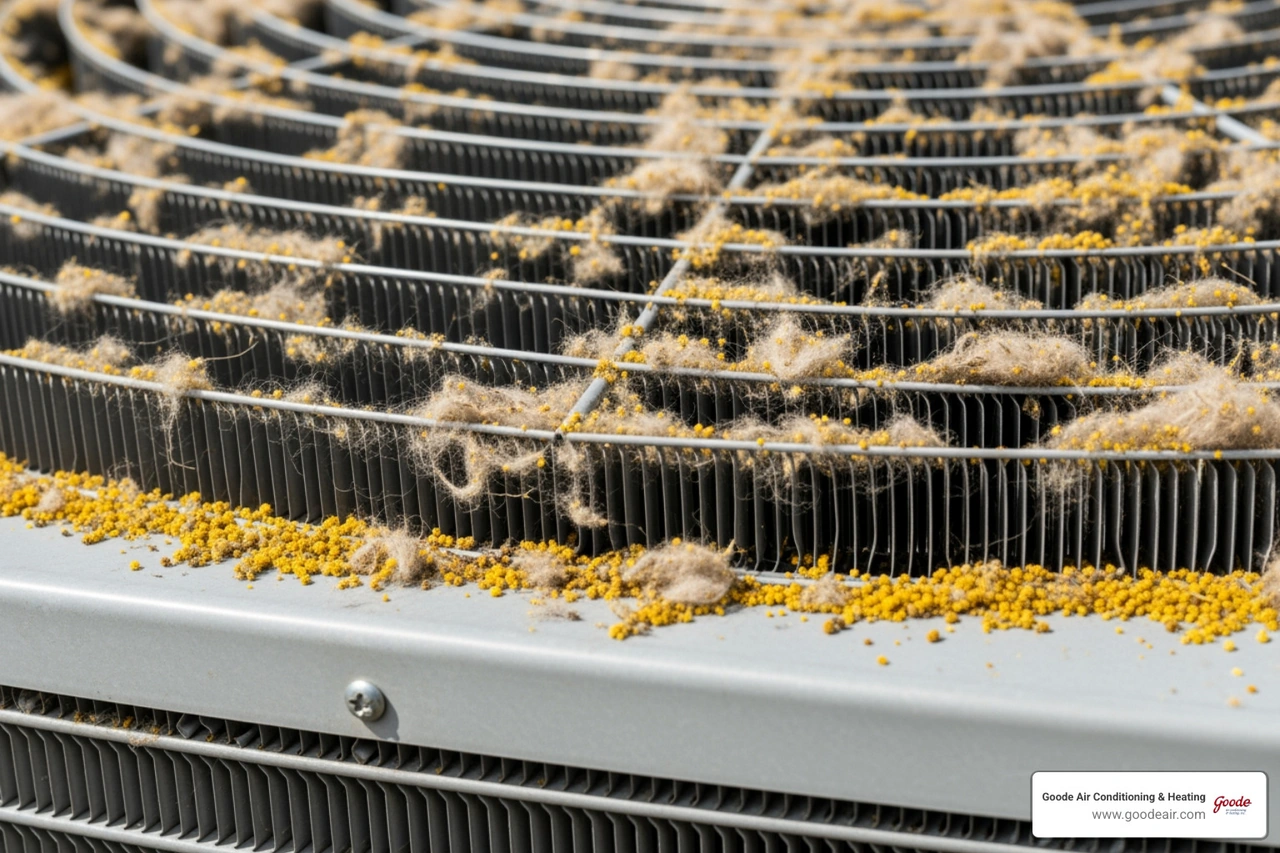
In Northeast Houston, our environment is practically designed to clog AC units. We don't just deal with "dust." We deal with a cocktail of biological and environmental debris that loves to hitch a ride on the airflow of your condenser fan.
- Cottonwood Fuzz and Pollen: During the spring, these airborne particles act like a net, catching other debris and forming a "sweater" over your coils.
- Grass Clippings: If you or your lawn service mow with the discharge chute pointed toward the AC unit, those wet clippings stick instantly to the fins.
- Limestone Dust: Common in newer developments across Valley Ranch and Tavola, this fine white dust can settle deep into the coil's "V" or "W" channels.
- Sticky Humidity: Our 70-90% humidity levels act as an adhesive, turning light dust into a muddy buildup that resists simple hosing.
Understanding these local challenges is key to maintaining your home. Read more about How Southeast Texas Climate Affects Your HVAC System to stay ahead of the weather.
Environmental Factors in Kingwood and Humble
Areas like Kingwood are known as the "Livable Forest" for a reason—the trees are beautiful, but they are a nightmare for outdoor AC units. Pine needles, sap, and heavy leaf fall can quickly obstruct airflow.
Furthermore, for those of us closer to the coast or Lake Houston, salt air can accelerate the corrosion of the delicate aluminum fins. When dirt sits on these fins and traps moisture against the metal, it creates a "micro-climate" that leads to premature coil rot. This is why we always emphasize the Benefits of Regular AC Maintenance in Texas.
Warning Signs of a Fouled Outdoor Unit
How do you know if your coils are the culprit? Your AC usually tries to tell you something is wrong before it breaks down completely.
- Warm Air from Vents: If the air coming out of your supply registers feels "lukewarm" instead of crisp and cold, the system is likely struggling to reject heat.
- Constant Running: If your AC never seems to turn off, even when the sun goes down, it’s a sign of lost efficiency.
- Short Cycling: The system may turn on and off rapidly as it hits "high-pressure" safety limits.
- Ice on the Lines: Surprisingly, a dirty outdoor coil can sometimes cause the indoor coil to freeze because it disrupts the entire refrigerant state-change process.
If you’re noticing these issues, you might find our article on Why Is My AC Running But Not Cooling very helpful.
Physical Symptoms to Watch For
You don't need a technician's license to spot a dirty coil. Take a walk outside and look at your unit.
- The "Grey Fuzz" Look: If the sides of your unit look like the lint trap of a dryer, you have a major airflow problem.
- Muddy Buildup: Look at the bottom few inches of the coil. This is where "splash-back" from rain often creates a thick wall of mud.
- The Hot Cabinet: If you touch the top of the AC unit and the metal feels hot enough to cook an egg, the heat isn't escaping the way it should.
The outdoor unit is only half the story. The Evaporator Coils, Air Handlers & Blower Systems inside your home also need to stay clean to maintain the performance connection.
How to Fix Dirty Condenser Coil Without Stress
If you've identified that your coils are dirty, you can take some basic steps to improve the situation. However, "fixing" it doesn't always mean a deep chemical clean—sometimes it's about clearing the path for the machine to breathe.
- Shut Off the Power: Safety first! Always turn off the AC at the thermostat and the outdoor "disconnect" box before touching the unit.
- Remove Large Debris: Hand-pick any leaves, twigs, or "trash" caught against the fins.
- Gentle Rinse: Use a garden hose (not a pressure washer!) to rinse the coils. Aim the water downward at a slight angle to flush the dirt out.
- Trim Vegetation: Ensure there is a clear path for air to enter and exit the unit.
Maintaining a clean environment around your unit also helps with indoor air quality. Discover How Proper HVAC Maintenance Prevents Mold Growth to keep your whole home healthy.
Maintaining Proper Clearance in Atascocita
In beautiful neighborhoods like Fall Creek and Atascocita, landscaping is a priority. However, your AC needs its personal space. We recommend the "Two-Foot Rule": maintain at least 24 inches of clear space on all sides of the unit.
- Mulch Management: Never pile mulch against the base of the AC. It traps moisture and attracts pests.
- Airflow Patterns: Avoid placing "privacy screens" or fences too close to the unit, as they can cause the hot air to recirculate back into the coils.
- Mowing Habits: Always point your lawnmower's discharge chute away from the AC.
Proper airflow outside is just as important as clean air inside. See How Clean Ducts Extend Your HVAC Equipment Life for more on the airflow-performance connection.
Professional Maintenance vs. DIY Cleaning
While a homeowner can rinse off surface dust, there is a big difference between a "rinse" and a "professional deep clean."
The Risks of DIY Deep Cleaning:
- Fin Damage: The aluminum fins are as thin as a soda can. A pressure washer will flatten them instantly, permanently blocking airflow.
- Electrical Hazards: High-voltage capacitors can hold a lethal charge even when the power is off.
- Chemical Safety: Many store-bought "coil cleaners" are acidic and can eat away at the copper tubing if not neutralized and rinsed perfectly.
A professional cleaning can actually improve your home's value by showing a history of care. Learn How HVAC Condition Affects Home Appraisals if you're planning to sell in the future.
Why Expert Cleaning Beats a Garden Hose
When we perform a professional coil cleaning at Goode Air Conditioning & Heating, we do more than just spray it with water.
- Inside-Out Rinsing: We often remove the top fan assembly to spray the coils from the inside out. This pushes the dirt out of the fins rather than deeper into them.
- Specialized Cleaners: We use non-acidic, foaming alkaline cleaners that lift grease and "mud walls" from deep within the coil structure.
- Fin Straightening: We use "fin combs" to repair any bent metal, restoring designed airflow.
- System Analysis: We measure the "Delta T" (temperature split) and amperage draw to ensure the cleaning actually restored the system's performance.
Frequently Asked Questions about AC Coils
Can I clean my AC coils myself?
You can perform basic maintenance like removing leaves and gently rinsing the exterior with a garden hose. However, we do not recommend using chemicals or attempting to take the unit apart. Professionals have the tools to clean deep between the fins without causing expensive damage or risking electrical shock.
How often should I schedule coil cleaning in Texas?
In the Northeast Houston area—including Kingwood, Humble, and Atascocita—we recommend a professional cleaning at least once a year, ideally in the spring. If you live near a construction site, have heavy pet hair, or have lots of cottonwood trees, a mid-summer rinse may also be necessary.
Will cleaning my coils lower my energy bill?
Absolutely. Cleaning a severely fouled coil can save you up to 30% on cooling costs. Even a standard annual cleaning can reduce energy use by 15% by allowing the system to run shorter, more efficient cycles.
Conclusion
The dirty condenser coil and performance connection is a simple reality of living in Texas. If your AC has to fight through a layer of Houston grime to do its job, you’ll pay the price in comfort, cash, and the lifespan of your equipment.
At Goode Air Conditioning & Heating, we’ve spent 50 years helping our neighbors in Crosby, Huffman, Spring, and beyond stay cool without the stress. We believe in transparent service, family values, and a 100% satisfaction guarantee. Don’t let a "dirty sweater" of dust ruin your summer and hike your bills.
Whether you are in Eagle Springs, Summerwood, or New Caney, we are here to ensure your system is clean, efficient, and ready for the heat.
Schedule your professional air conditioning service today with the experts at Goode Air Conditioning & Heating and feel the difference a clean system makes!

Customer Testimonials
See why so many homeowners trust Goode Air Conditioning & Heating, Inc.—our 4.8-star Google rating and hundreds of happy customers speak to the quality, care, and service we deliver every day.

The technician Goode AC is one of the best businesses I know of. I have had their annual maintenance check up for several years. I’m so impressed with the technician who has serviced my AC several times. Always on time, pleasant, considerate, thorough in his work and explains the problems where I can easily understand. Thankful for doing business with professionals.
I have been a customer for at least 30 years. They have replaced 3 air conditioners, a furnace and heat exchanger. Today they replaced the air ducts in my attic that were falling apart and never been cleaned. Wonderful job, polite workers, great clean up. I can already tell the difference in the quality of the air. Love you guys!!
Great experience today with Goode Air Conditioning. Hoger, our technician, was very knowledgeable and provided excellent customer service. We look forward to our Spring maintenance visit.
I have used Goode Air Conditioning and Heating for many years. The company has excellent customer service and the technicians are knowledgeable, thorough and professional.