





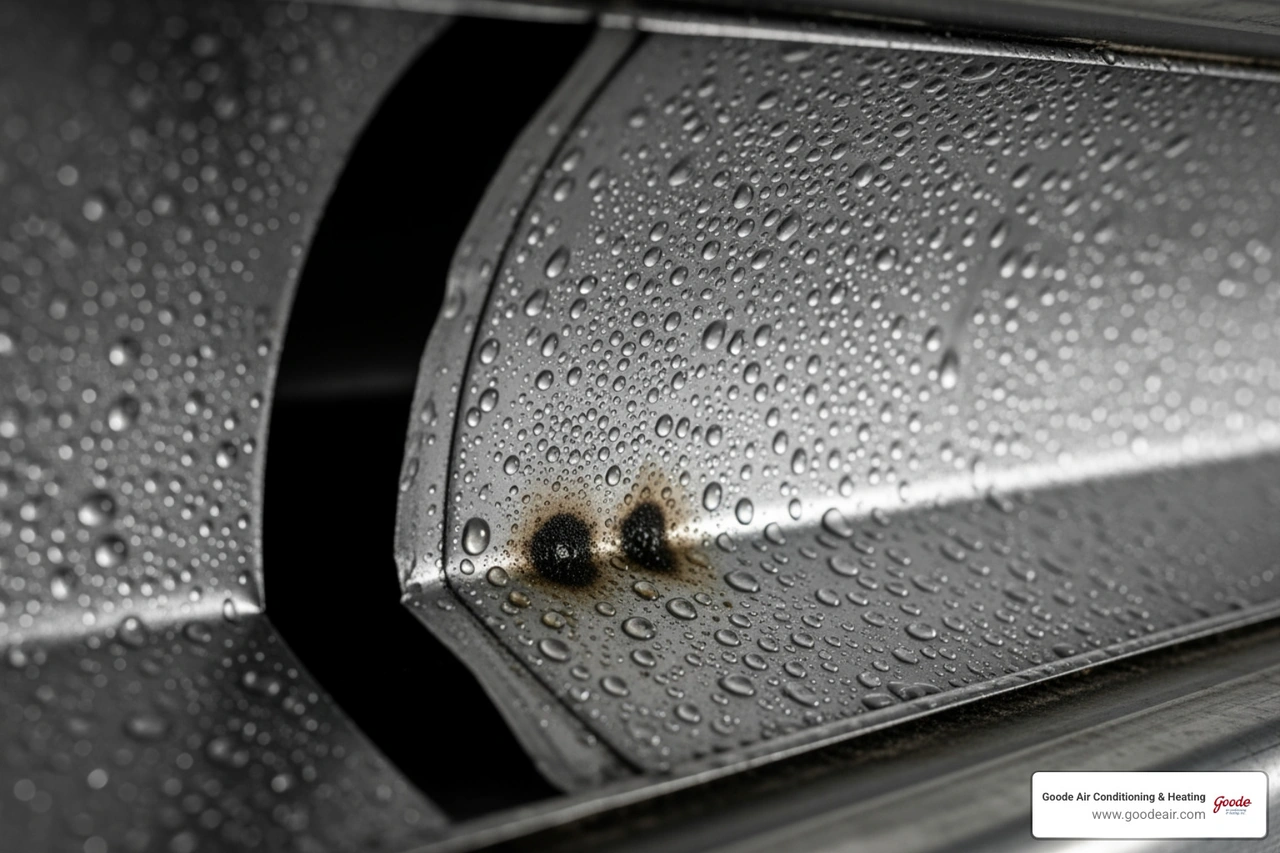
Why Northeast Houston Homes Are Quietly Growing Contamination Inside Their Vents
Understanding how humidity affects duct contamination is one of the most important things a homeowner in the greater Houston area can do to protect their family's health and their HVAC system. When warm, moisture-heavy air meets the cool surfaces inside your ductwork, the result is condensation — and that moisture sets off a chain reaction that can turn your vents into a breeding ground for mold, bacteria, and dust mites in as little as 24 to 48 hours.
Here's a quick summary of what's happening inside your ducts right now if humidity is a problem:
- Condensation forms when cool duct surfaces meet warm, humid indoor or outdoor air
- Dust becomes sticky and clings to duct walls instead of passing through the system
- Mold and bacteria begin growing within 24-48 hours of moisture exposure
- Microbial volatile organic compounds (mVOCs) are released, causing that familiar musty smell
- Dust mites multiply, triggering allergies and respiratory issues
- HVAC efficiency drops, pushing energy bills higher
In Northeast Houston, this isn't a hypothetical risk. Outdoor humidity regularly sits between 70% and 90% from May through October, with dew points that make condensation inside ductwork nearly unavoidable without the right setup. The EPA recommends keeping indoor humidity between 30% and 50% — but without proper insulation, correct system sizing, and routine maintenance, many local homes are running well above that threshold without their owners even knowing it.
The good news is that this is a manageable problem. The first step is understanding exactly what's going on inside those hidden stretches of ductwork behind your walls and above your ceilings.
The Science of Sweat: How Humidity Affects Duct Contamination
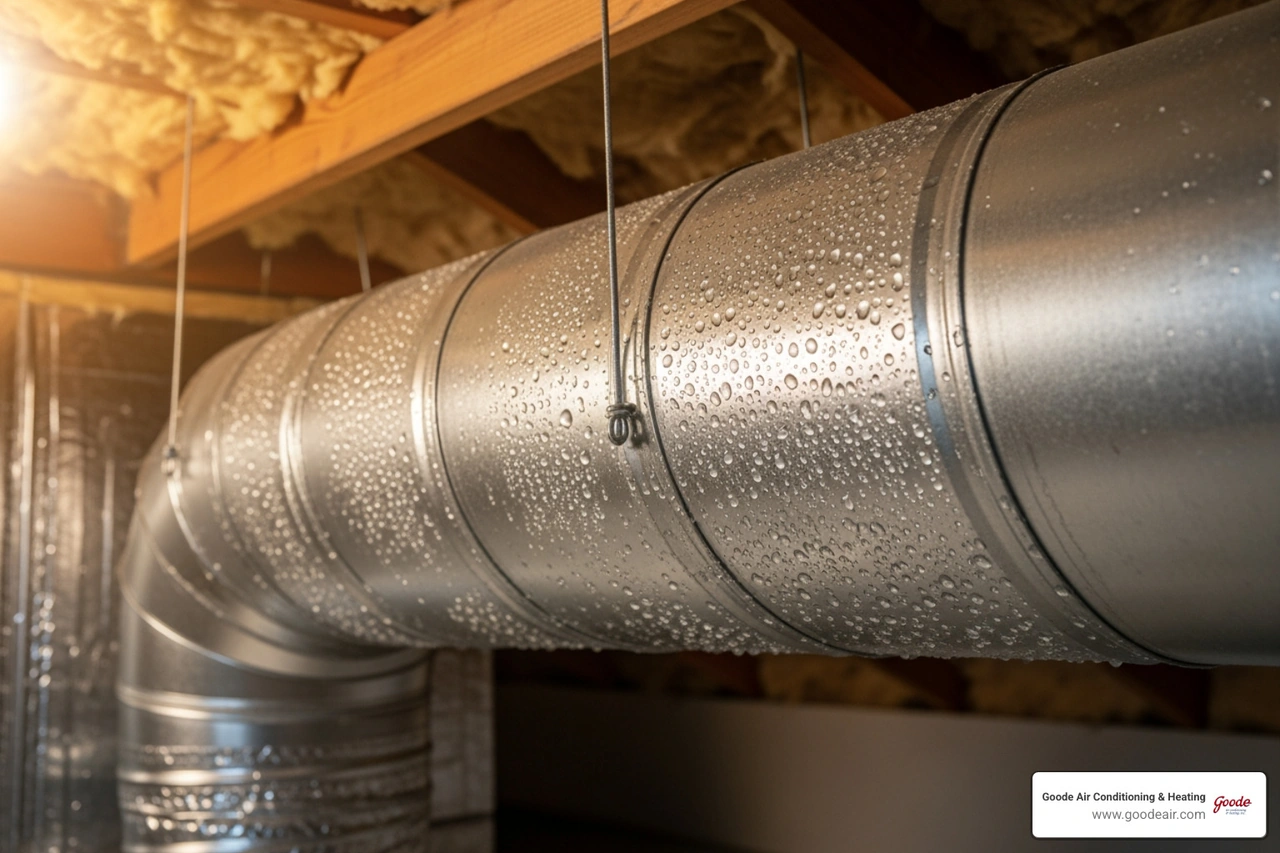
If you've ever seen a cold glass "sweat" on a hot Texas day, you've already seen the basic science behind duct contamination.
Your air ducts often carry air in the 55 to 65 degree range. Meanwhile, attics in our area can get brutally hot, and the surrounding air is often loaded with moisture. When that warm, humid air touches a duct surface that's below the dew point, water vapor turns into liquid. That is the main event. Everything else follows from there.
The primary mechanism behind how humidity affects duct contamination is condensation caused by temperature differences. Once moisture lands on dust, insulation fibers, pet dander, or other debris inside the system, that harmless-looking dust layer turns into a damp food source for microbial growth.
That is why humidity is not just a comfort issue. It is an indoor air quality issue. It also explains why we encourage homeowners to learn more about Humidity & Indoor Air Quality and How Humidity Affects Your AC Performance. Comfort, cleanliness, and equipment performance are all tied together.
A few things happen fast once ducts start "sweating":
- Dust gets sticky and clings to duct walls
- Condensation collects in seams, low spots, liners, and around registers
- Mold spores that were already present in normal household dust can activate
- Bacteria can multiply in damp organic buildup
- Metal components may begin rusting or corroding over time
- Wet insulation can lose thermal performance, making the condensation problem worse
Some technicians call the damp mixture of dust and moisture "sludge" or "bio-sludge." Not very elegant, but very accurate.
How quickly mold grows in moist environments
Mold does not need much encouragement. In the right conditions, growth can begin within 24 to 48 hours of moisture exposure.
That timeline surprises a lot of homeowners, but it makes sense when you look at what ducts provide:
- Darkness
- Moderate temperatures
- Limited disturbance
- Dust and dander as a food source
- Intermittent moisture from condensation
In other words, a neglected duct system can accidentally become a buffet line for mold. Spores are common in normal indoor air. The real trigger is not the spore itself, but the moisture. Once surfaces stay damp long enough, spores germinate and begin colonizing.
Bacteria can also thrive in moist HVAC environments, especially near drain pans, coils, and other components where water lingers. Dust mites are another concern. About 20 million Americans are allergic to them, and high humidity helps them survive and multiply.
The primary mechanism of how humidity affects duct contamination
Let's make it simple: humidity by itself is not the whole problem. Surface moisture is.
High indoor humidity becomes dangerous when it causes condensation on duct surfaces. This usually happens because of:
- Cold supply air moving through ducts
- Warm, humid air leaking into attics, crawl spaces, or wall cavities
- Poor duct insulation
- Air leaks at joints and seams
- Restricted airflow that makes parts of the system too cold
When moisture repeatedly forms and fails to dry out quickly, contamination takes hold. So if someone asks, "What is the main way humidity causes dirty ducts?" the answer is: it creates condensation, and condensation wets the debris that microbes feed on.
Common Sources of Moisture in Northeast Houston Ductwork
Northeast Houston homes deal with a few moisture sources at the same time. That is what makes our climate so tough on duct systems.
Common sources include:
- Outdoor humidity infiltrating through leaks and gaps
- Ducts running through superheated attics
- Torn or missing duct insulation
- Leaky return ducts pulling in humid attic or crawl space air
- Plumbing leaks near ducts
- Roof leaks wetting insulation and nearby duct runs
- Clogged condensate drains
- Dirty evaporator coils or filters reducing airflow
- Oversized AC systems that cool quickly but dehumidify poorly
Our area regularly sees outdoor humidity in the 70% to 90% range during the warm season. Add attic temperatures that can exceed 130 degrees, and your ductwork is stuck in a constant battle between cold interior surfaces and hot damp surrounding air.
If you want a practical homeowner-focused checklist, our Duct Cleaning Inspection Humble TX Guide is a helpful next read.
| Issue | Oversized AC | Correctly Sized AC |
|---|---|---|
| Cooling cycle length | Short, frequent cycles | Longer, steadier cycles |
| Moisture removal | Poor | Better |
| Indoor feel | Cool but clammy | Cool and drier |
| Risk of duct condensation | Higher | Lower |
| Mold risk | Higher | Lower |
| Energy performance | Often worse due to inefficiency | More balanced |
Why oversized AC systems worsen how humidity affects duct contamination
An oversized system sounds like a good idea until humidity gets involved.
Air conditioners remove moisture best when they run long enough. A unit that is too large cools the house quickly and shuts off before it has removed enough water vapor from the air. The temperature may look fine on the thermostat, but the house still feels sticky.
That leftover indoor moisture increases the chance that duct surfaces, vents, and nearby HVAC components will hit the dew point and collect condensation. Research suggests that roughly 25% to 40% of residential HVAC systems are improperly sized, and oversizing is a common reason homes feel cool but not comfortable.
Short cycling also means less consistent airflow, less drying time, and more stop-start operation. That can leave wet components wetter for longer.
The role of duct insulation in preventing moisture
Duct insulation is one of the unsung heroes of moisture control.
When ducts in attics, garages, or other unconditioned spaces are properly insulated, the outer duct surface stays closer to the surrounding air temperature. That reduces the chance of condensation forming on the outside or within the insulation layer. Research cited in the industry suggests proper insulation can reduce condensation-related moisture problems by up to 60%.
In practical terms, good insulation helps by:
- Creating a thermal barrier between cold duct air and hot humid surroundings
- Reducing "duct sweating"
- Protecting energy efficiency
- Helping ducts stay dry enough to resist mold growth
In hot, humid attic environments, many systems benefit from well-sealed insulation around ductwork, often at R-8 levels for better thermal protection. Sealing matters too. If joints leak, humid air can still get into the system even if insulation is present. That is why mastic sealing at joints and connections is so important.
Identifying the Signs of Humidity-Induced Contamination
Most homeowners do not inspect the inside of their ductwork every weekend, and honestly, that's probably for the best. But humidity-related contamination usually leaves clues.
The most common signs include:
- Musty smells when the AC starts
- Visible dark spotting or fuzzy material on vent covers
- Condensation on vents or nearby ceilings
- Water stains around registers
- Excess dust collecting around supply vents
- Allergy symptoms that get worse indoors
- Persistent stuffy or "dirty sock" odors
- Weak airflow or uneven cooling
- Rising energy use with no clear explanation
That musty smell matters. Established microbial growth often releases microbial volatile organic compounds, or mVOCs. Those are the gases behind the "wet sock," musty-basement, or locker-room smell some homeowners notice when the system kicks on.
For a broader look at warning signs and benefits of service, see Duct Cleaning Benefits for Humid Climate Homes.
Distinguishing mold growth from normal dust buildup
This part is important, because not every dark smudge is mold.
Normal dust buildup usually looks:
- Dry
- Gray or tan
- Evenly distributed
- Easy to wipe or brush away
Possible mold growth is more likely to appear:
- Black, green, or unusually dark
- Spotty, clustered, or irregular
- Fuzzy, slimy, or stain-like
- Paired with a persistent musty odor
- Located where moisture is likely, such as around supply boots or near the air handler
Even then, appearance alone is not always enough for a firm identification. Soot, staining, or ordinary dirt can fool people. What usually separates real microbial growth from plain dust is the combination of visible material, moisture history, odor, and repeat appearance after cleaning.
One other clue: dust does not usually smell. Mold often does.
Health risks for vulnerable populations
Not everyone reacts the same way to contaminated ducts.
The people most likely to feel the effects are:
- Infants and children
- Older adults
- People with asthma
- People with allergies
- Anyone with COPD or other respiratory conditions
- Immunocompromised individuals
High humidity also supports dust mites, and millions of Americans are allergic to them. When duct contamination includes dust mite waste, mold fragments, and airborne debris, symptoms can include sneezing, coughing, congestion, watery eyes, headaches, sinus irritation, and asthma flare-ups.
Sometimes the pattern is subtle. A person feels better when away from home, then symptoms return indoors. That does not prove the ducts are the only cause, but it is a strong reason to investigate the HVAC system.
Preventive Strategies to Keep Your Vents Dry and Clean
The best way to deal with humidity-related duct contamination is to stop the moisture before it becomes a science fair project.
The EPA recommendation is to keep indoor relative humidity between 30% and 50%. Once indoor humidity starts climbing above about 55% to 60%, the risk of condensation and mold growth rises quickly.
Here are the most effective preventive steps:
- Use a hygrometer to track indoor humidity
- Keep indoor RH in the 30% to 50% range
- Have your HVAC system checked for sizing and airflow issues
- Seal and insulate ducts in attics and other unconditioned spaces
- Change filters on schedule
- Flush condensate drain lines periodically
- Use bathroom and kitchen exhaust fans
- Fix roof, plumbing, and drain leaks quickly
- Consider whole-home dehumidification if indoor humidity stays high
For maintenance-focused prevention, our guide on How Proper HVAC Maintenance Prevents Mold Growth goes deeper.
A few practical details matter more than homeowners realize:
- MERV 8 to 11 pleated filters are often a good balance for capturing debris without choking airflow
- Filters should be checked regularly and replaced more often in homes with pets
- Dirty coils and clogged filters can reduce airflow enough to increase condensation risk
- A simple vinegar flush of the condensate line every few months can help reduce sludge and blockages
Ventilation strategies for microbial risk reduction
Ventilation affects moisture risk too.
Research on humid duct conditions suggests that continuous low-flow ventilation may be slightly better for contamination control than shutting airflow down completely for long periods. Why? Because stagnant, damp air tends to dry more slowly, and sudden startup after stillness can create pressure changes that dislodge settled particles.
For homes, the takeaway is simple:
- Avoid unnecessary stagnant air in damp parts of the system
- Maintain steady, healthy airflow
- Make sure the system can drain and dry properly between cycles
This does not mean blasting the fan all day is always best. In fact, running the fan continuously can be a problem in air conditioning season if it blows moisture off a wet evaporator coil back into the home. More on that in the FAQ below.
Homeowner action steps for moisture control
If you want a short list of smart habits, start here:
- Check humidity with a hygrometer once a week during humid months.
- Run bathroom fans during showers and for a while afterward.
- Use your kitchen exhaust fan while cooking.
- Keep the HVAC fan set to "Auto" unless a technician recommends otherwise.
- Inspect vents for condensation, stains, or dark spotting.
- Replace filters on time.
- Look in the attic for torn duct insulation or disconnected runs.
- Repair roof or plumbing leaks immediately.
- Schedule seasonal HVAC tune-ups.
- If the house always feels clammy, ask about dehumidification and system sizing.
Professional Solutions for Contaminated Systems
Once biological growth has started, surface dusting and wishful thinking usually do not solve the problem.
Professional duct service may include:
- Full inspection of supply and return ductwork
- Mechanical agitation to loosen debris
- HEPA-filtered vacuum collection
- Cleaning of registers, grilles, and accessible duct runs
- Air handler and blower compartment cleaning
- Evaporator coil cleaning where needed
- Moisture source identification
- Targeted antimicrobial treatment when appropriate
If you are dealing with musty odors, visible contamination, or repeated humidity issues, our Duct Cleaning Humble TX page and Air Duct Cleaning Contractor in Humble TX article can help you understand what a proper professional process should include.
Professional cleaning can be very effective, but it works best when paired with moisture correction. Cleaning out the contamination without fixing the condensation problem is like drying the floor while leaving the leak active.
Why cleaning alone is insufficient for biological growth
This is especially true with mold.
Mechanical cleaning removes visible growth and debris, but spores can remain. In porous materials, fungal structures can embed below the surface. That is why cleaning alone may not be enough in systems affected by persistent moisture.
Additional steps may include:
- Correcting leaks or insulation failures
- Improving dehumidification
- Cleaning coils and drain pans
- Applying appropriate antimicrobial products where suitable
- Replacing heavily contaminated porous materials if necessary
This matters because mold can develop root-like structures called hyphae that anchor into porous liners or duct board. On those materials, simple vacuuming may leave part of the colony behind. In severe cases, replacement is more reliable than trying to "save" contaminated porous duct sections.
Recommended inspection frequency for humid climates
In humid parts of Northeast Houston, we generally recommend being more proactive than homeowners in drier regions.
A practical schedule looks like this:
- HVAC maintenance at least once a year
- Duct inspection every 2 to 3 years in humid homes, or sooner if symptoms appear
- Duct cleaning every 3 to 5 years for many homes
- Closer to every 2 years for homes with pets, heavy dust, past water events, or sensitive occupants
- Immediate inspection after roof leaks, plumbing leaks, flooding, or major remodeling
Post-construction cleanup is especially important. Fine drywall dust and renovation debris can settle inside ducts and become excellent food sources once humidity enters the picture.
Frequently Asked Questions about Duct Moisture
How often should I clean my ducts in a humid climate like Humble, TX?
A common baseline is every 3 to 5 years, but many humid-climate homes benefit from closer monitoring. We often suggest earlier inspection or cleaning if you have pets, allergies, asthma, recent remodeling, visible vent debris, or musty odors. In some homes, a 2-year interval makes sense.
Can high humidity alone cause mold without a leak?
Not always by itself, but it can absolutely create the conditions for mold if it leads to condensation. Mold needs actual surface moisture, not just humid air floating around. If high indoor humidity causes ducts, coils, boots, or vents to stay damp, that is enough to support growth even without a plumbing or roof leak.
Does running the AC fan on "On" instead of "Auto" help with humidity?
Usually no during cooling season. Keeping the fan on continuously can re-evaporate moisture sitting on the evaporator coil and move that humidity back into the home. In many cases, "Auto" is better because it lets moisture drain away between cycles. If your home feels sticky, this setting is worth checking before you blame the weather alone.
Conclusion
Humidity does not just make Northeast Houston homes uncomfortable. It changes what happens inside the duct system itself. Condensation turns ordinary dust into sticky buildup, activates mold growth in as little as 24 to 48 hours, helps bacteria and dust mites thrive, and forces your HVAC system to work harder than it should.
The good news is that the problem is preventable and fixable. With the right indoor humidity range, proper duct insulation, good airflow, regular maintenance, and timely professional cleaning, your vents do not have to double as a biology experiment.
At Goode Air Conditioning & Heating, we have spent 50 years helping homeowners across Northeast Houston protect comfort, indoor air quality, and HVAC performance with honest service and practical solutions. If you are noticing musty smells, vent condensation, allergy flare-ups, or signs of contaminated ductwork, we are here to help with the care and attention your home deserves.


Customer Testimonials
See why so many homeowners trust Goode Air Conditioning & Heating, Inc.—our 4.8-star Google rating and hundreds of happy customers speak to the quality, care, and service we deliver every day.

The technician Goode AC is one of the best businesses I know of. I have had their annual maintenance check up for several years. I’m so impressed with the technician who has serviced my AC several times. Always on time, pleasant, considerate, thorough in his work and explains the problems where I can easily understand. Thankful for doing business with professionals.
I have been a customer for at least 30 years. They have replaced 3 air conditioners, a furnace and heat exchanger. Today they replaced the air ducts in my attic that were falling apart and never been cleaned. Wonderful job, polite workers, great clean up. I can already tell the difference in the quality of the air. Love you guys!!
Great experience today with Goode Air Conditioning. Hoger, our technician, was very knowledgeable and provided excellent customer service. We look forward to our Spring maintenance visit.
I have used Goode Air Conditioning and Heating for many years. The company has excellent customer service and the technicians are knowledgeable, thorough and professional.