





Why Is My AC Running But Not Cooling? (Quick Answer for Texas Homeowners)
If you're wondering why is my ac running but not cooling, here are the most common reasons:
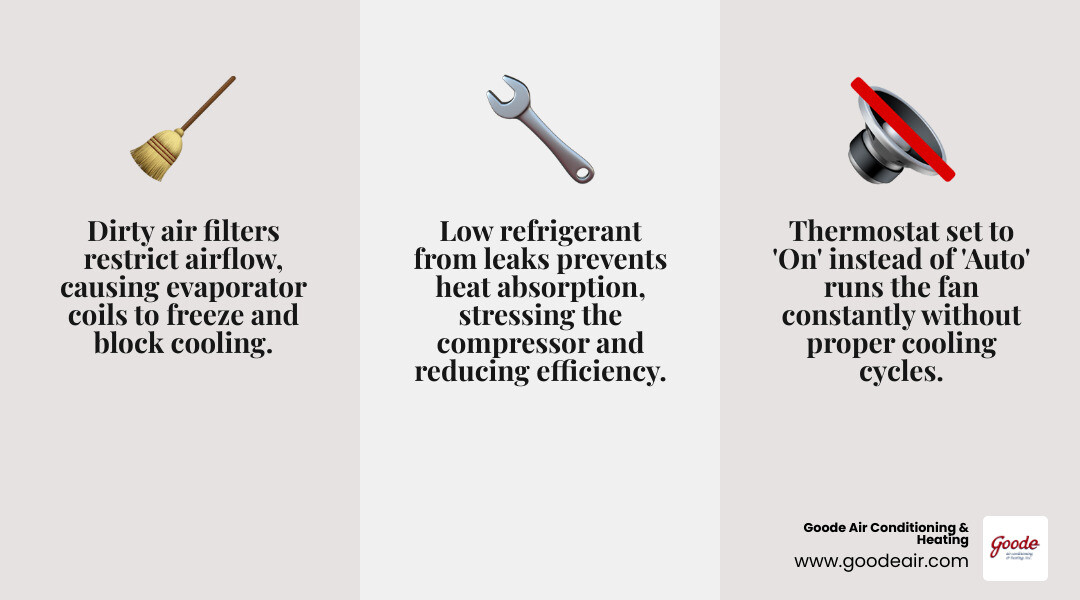
- Dirty air filter - Restricts airflow and can freeze your evaporator coil
- Thermostat set incorrectly - Fan may be set to "On" instead of "Auto," or temperature is set too high
- Frozen evaporator coil - Often caused by poor airflow or low refrigerant
- Low refrigerant / refrigerant leak - Prevents the system from absorbing heat properly
- Blocked or dirty outdoor condenser unit - Can't release heat if coils are clogged or airflow is restricted
- Failed capacitor or compressor - Outdoor unit may appear to run while the compressor isn't actually working
- Leaky ductwork - Cooled air escapes before reaching your living spaces
- Undersized or aging system - Struggles to keep up during peak Texas heat
It's one of the most frustrating things a homeowner in Northeast Houston can face: your air conditioner is humming, air is blowing through the vents, but the house just keeps getting warmer. You check the thermostat. You lower the setting. Nothing changes. In Texas — where summer heat and humidity arrive early and hit hard — a cooling system that runs without actually cooling isn't just uncomfortable. It can feel like a real emergency.
The good news is that most cases of an AC running but not cooling trace back to a manageable set of causes. Some you can fix yourself in minutes. Others need a trained technician. Either way, knowing what to look for puts you in control, and that's exactly what this guide is here to help you do.
At Goode Air Conditioning & Heating, we've helped homeowners across Kingwood, Humble, Atascocita, Porter, and the surrounding Northeast Houston area work through exactly this problem — especially as temperatures climb each spring and summer. This guide walks you through every major cause, from the simple fixes you can handle today to the signs that it's time to call in a professional.
Common Reasons Why Is My AC Running But Not Cooling?
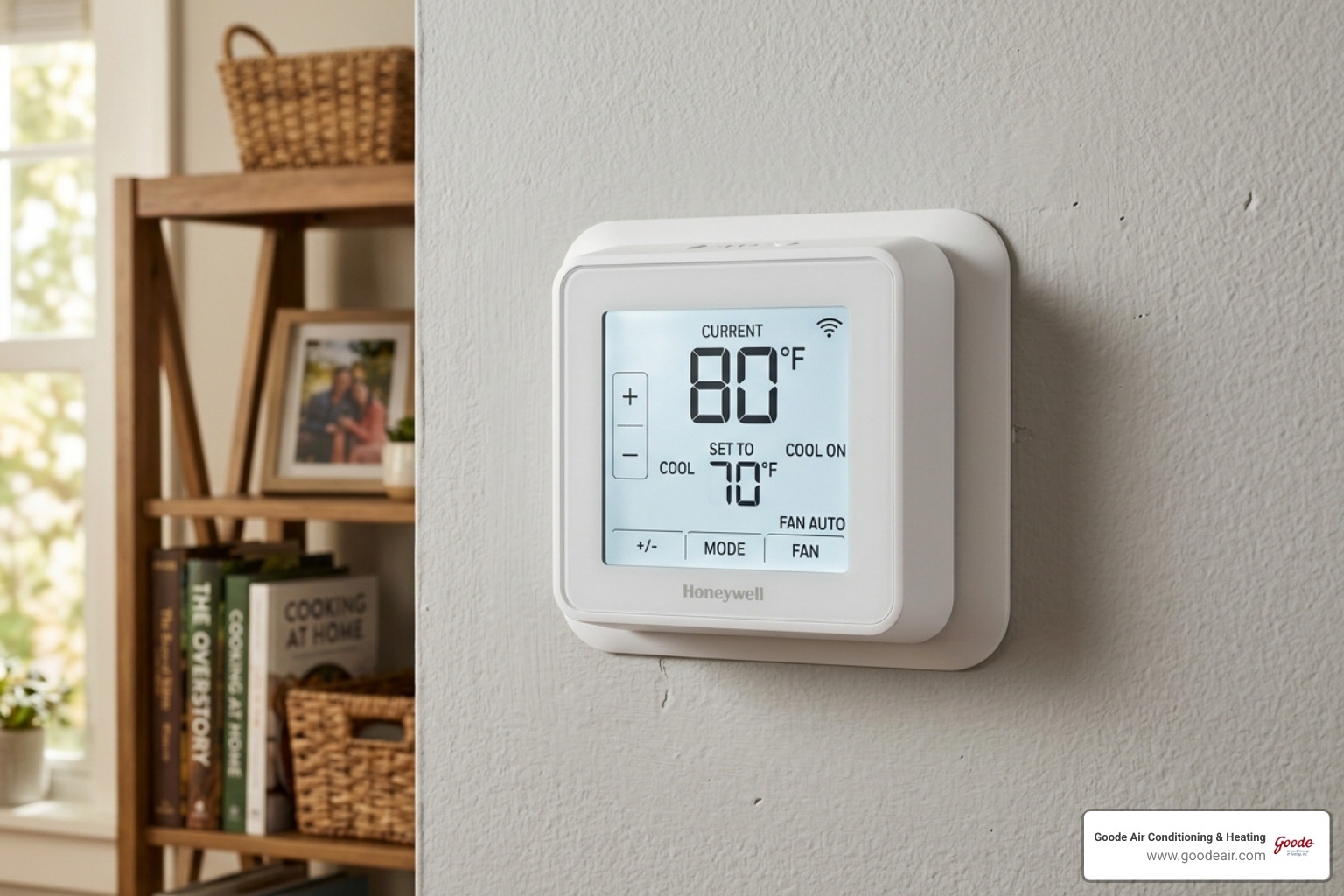
When your house feels like a sauna despite the unit humming along, the first thing we always recommend is a "sanity check" of your thermostat. It sounds simple, but you’d be surprised how often a small setting change or a power surge can throw your comfort out of whack.
First, verify that your thermostat is set to "Cool" and the temperature is at least five degrees below the current room temperature. If it's set to "Heat" by mistake—or if a smart thermostat has reverted to a "Vacation" or "Eco" mode—your system might blow air that isn't chilled.
Another common culprit is the Fan Mode. If your fan is set to "On" rather than "Auto," the blower will run 24/7, even when the cooling cycle is off. This circulates unconditioned air, making it feel like the AC isn't doing its job. For a deeper look at system basics, our AC Repair Kingwood TX Complete Guide covers how these components interact.
| Troubleshooting Step | DIY or Pro? | Description |
|---|---|---|
| Check Thermostat Settings | DIY | Ensure it's on "Cool" and "Auto" fan mode. |
| Inspect Air Filter | DIY | Replace if it's grey, dusty, or blocked. |
| Check Circuit Breakers | DIY | Reset once if the outdoor unit isn't humming. |
| Refrigerant Levels | Pro | Requires EPA certification to handle and seal leaks. |
| Capacitor Replacement | Pro | Involves high-voltage electrical components. |
Troubleshooting Why Is My AC Running But Not Cooling at Night
If the sun has gone down but the temperature in your Humble or Atascocita home is still climbing, check your thermostat batteries. Weak batteries can cause the screen to stay lit while the signal to the compressor fails.
You should also look at your circuit breaker. Sometimes a power surge—common during Texas spring storms—can trip the breaker for the outdoor unit while the indoor air handler keeps running. This leaves you with a fan blowing warm air. If you find a tripped breaker, reset it once. If it trips again immediately, stop and call for a professional AC repair in Humble, TX.
Finally, try the 3-minute rule. If you’ve been fiddling with the settings, turn the system off at the thermostat and wait at least three to five minutes. This allows the refrigerant pressures to equalize and prevents the compressor from "short-cycling," which can lead to permanent damage.
Testing Your Thermostat and Control Board
Sometimes the issue isn't the AC hardware at all, but the "brain" of the system. For those in Crosby or Huffman, a faulty Y-wire connection (the wire that signals for cooling) can prevent the outdoor unit from starting.
If you use a smart thermostat, check for overrides. In April 2026, many modern systems are integrated with energy-saving programs that might limit cooling during peak hours. Also, ensure your thermostat isn't mounted near a heat source like a lamp or a sunny window. This can trick the sensor into thinking the house is hotter than it is, causing the system to run constantly without ever reaching the "satisfied" state. For more on local system nuances, see our AC Repair Crosby TX Complete Guide.
Airflow Obstructions and Frozen Evaporator Coils
In the Texas heat, airflow is everything. When airflow is restricted, your AC can't "breathe," and the cooling process breaks down. The most common result of restricted airflow is a frozen evaporator coil.
The evaporator coil is located inside your indoor unit. Its job is to absorb heat from your home's air. If there isn't enough air moving over the coil, the refrigerant inside gets too cold, and the condensation on the outside of the coil turns to ice. Once a layer of ice forms, it acts as an insulator, preventing the coil from absorbing any more heat. This is a primary reason why is my ac running but not cooling. To prevent this, learning how to extend the life of your AC in Texas starts with maintaining clear airflow path.
Why Is My AC Running But Not Cooling Due to Dirty Filters?
The humble air filter is the #1 cause of AC service calls in Porter and New Caney. A filter clogged with dust, pet dander, and Texas pollen forces the blower motor to work harder, creating a pressure drop that leads to coil freezing.
We recommend checking your filter every 30 days during the peak cooling season. Use the "light-pass test": hold your filter up to a light bulb. If you can't see light through it, it's time for a change. While high MERV-rated filters are great for air quality, they can sometimes be too restrictive for older systems. If you're in the Porter area, check our AC Repair Porter TX Complete Guide for tips on choosing the right filter for our local climate.
How to Safely Thaw a Frozen AC System
If you see ice on the copper lines or the indoor unit, shut the system off immediately. Running a frozen AC can slug the compressor with liquid refrigerant, which is a "death sentence" for the motor.
- Turn the thermostat to "Off."
- Turn the Fan setting to "On." This blows warm air over the coils to melt the ice.
- Check the condensate drain. As the ice melts, it will produce a lot of water. Make sure your drain line isn't clogged, or you'll end up with a ceiling leak.
- Wait 2–4 hours for a complete thaw.
Once thawed, replace the filter and try running the system again. If it freezes back up, you likely have a refrigerant leak or a mechanical issue. Ignoring these signs can lead to bigger problems—similar to how ignoring warning signs your heating system needs repair can lead to a winter emergency.
Outdoor Unit Issues and Refrigerant Leaks
Your outdoor unit (the condenser) is responsible for dumping the heat collected from inside your home into the outside air. In Northeast Houston, our outdoor units have to battle high humidity, grass clippings, and nesting insects. If the condenser coils are caked in dirt or blocked by overgrown bushes, the heat has nowhere to go.
The "2-foot rule" is essential here: keep at least two feet of clear space around all sides of your outdoor unit. Also, check the aluminum fins. If they are flattened or clogged with "cottonwood" or dust, the system will overheat and stop cooling effectively. This is why knowing how often should you service your AC in Texas is so important—a simple annual cleaning can prevent a total breakdown.
Identifying Refrigerant Line Issues and Leaks
Refrigerant is the lifeblood of your AC. It doesn't get "used up" like gasoline; it circulates in a sealed loop. If your system is low on refrigerant, it means you have a leak.
You can check the copper lines running into your house. The larger, insulated line should feel "beer-can cold" and may have some sweat on it. If it’s warm, or if you hear a hissing or bubbling sound, you likely have a leak. Because refrigerant is a regulated chemical, you must have an EPA-certified technician to handle repairs. If you're facing a major leak, you may need to consult our Repair vs Replace Your HVAC Decision Guide to see if an older unit is worth the investment.
The Danger of Low Refrigerant Levels
Low refrigerant doesn't just mean "less cold" air. It causes the compressor to run hotter and longer, significantly shortening the lifespan of your AC system in Texas.
When levels are low, the pressure inside the coils drops, causing them to freeze over—even in 100-degree weather. Furthermore, the compressor relies on the refrigerant to stay cool. Without it, the internal components can seize up, leading to a very expensive hardware failure. If your vents are blowing room-temperature air and you've already checked the filter, low refrigerant is a prime suspect.
Mechanical Failures and System Sizing
Sometimes the problem is purely mechanical. One of the most common failures we see in Spring and Atascocita is a blown capacitor. The capacitor is like a giant battery that gives the compressor and fan the "kick" they need to start. If the capacitor fails, you might hear the outdoor unit humming, but the fan won't spin, or the compressor won't engage.
Other mechanical issues include:
- Fan Motor Burnout: If the outdoor fan isn't spinning, the refrigerant can't cool down.
- Compressor "Hard Starting": As systems age, they struggle to turn on, often tripping the breaker.
- Ductwork Leaks: According to the Department of Energy, typical homes lose 20-30% of conditioned air through leaky ducts. If your AC is running but the house is hot, the cold air might just be cooling your attic instead of your bedroom.
Finally, consider the size of your system. If you’ve recently added a room or if your attic insulation has degraded, your AC might be undersized. An undersized unit will run 24/7 during a Houston July but will never be able to pull the temperature down to your desired setting.
When to Call a Professional for AC Repair
While DIY troubleshooting is great for filters and thermostats, some things are best left to the experts at Goode Air Conditioning & Heating. You should call us immediately if you notice:
- Electrical Humming or Buzzing: This often indicates a failing contactor or capacitor.
- Burning Smells: This could be a sign of wiring issues or a motor shorting out.
- Repeated Breaker Trips: Never keep resetting a breaker that won't stay on; it's a fire hazard.
- Icing on Lines: As mentioned, this requires a professional diagnostic to find the root cause.
For residents in Humble and the surrounding areas, our complete guide to AC repair provides more detail on what our technicians look for during a service call.
Conclusion: Restoring Comfort in Northeast Houston
Living in Northeast Houston means your air conditioner is your most important appliance. When you're stuck wondering why is my ac running but not cooling, don't wait until the house is 90 degrees to take action. From checking your filters to clearing your outdoor unit, a little bit of troubleshooting goes a long way.
At Goode Air Conditioning & Heating, we’ve spent 50 years providing trusted, family-valued service to our neighbors in Kingwood, Humble, Atascocita, and beyond. We understand the unique challenges of the Texas climate and are committed to transparent pricing and a 100% satisfaction guarantee.
Don't sweat through another afternoon. If your DIY checks haven't solved the problem, schedule your professional air conditioning service today and let us get your home back to the cool oasis it should be.
Frequently Asked Questions
How long should it take for my AC to cool my house?A properly sized and functioning AC should be able to lower the temperature of your home by about 1 degree per hour, depending on the outdoor heat index. Most systems run in 15–30 minute cycles. If your system has been running for three hours and the temperature hasn't moved, there is likely an issue with airflow or refrigerant.
Is it safe to run my AC if it isn't blowing cold air?No. If your AC is running but not cooling, the compressor is likely working overtime and overheating. This can lead to permanent mechanical failure. Furthermore, if the issue is a frozen coil, continuing to run the system can cause water damage to your furnace or flooring as the ice melts. It’s best to shut the system down until it can be inspected.
How do I know if my AC system is too old or undersized?Most AC systems in the Houston area have a lifespan of 10-15 years. If your unit is in that age range and struggles to keep up even after a tune-up, it may be nearing the end of its life. If your system is relatively new but has never been able to cool the house below 80 degrees on a hot day, it may be undersized for your home's square footage or heat load.

Customer Testimonials
See why so many homeowners trust Goode Air Conditioning & Heating, Inc.—our 4.8-star Google rating and hundreds of happy customers speak to the quality, care, and service we deliver every day.

The technician Goode AC is one of the best businesses I know of. I have had their annual maintenance check up for several years. I’m so impressed with the technician who has serviced my AC several times. Always on time, pleasant, considerate, thorough in his work and explains the problems where I can easily understand. Thankful for doing business with professionals.
I have been a customer for at least 30 years. They have replaced 3 air conditioners, a furnace and heat exchanger. Today they replaced the air ducts in my attic that were falling apart and never been cleaned. Wonderful job, polite workers, great clean up. I can already tell the difference in the quality of the air. Love you guys!!
Great experience today with Goode Air Conditioning. Hoger, our technician, was very knowledgeable and provided excellent customer service. We look forward to our Spring maintenance visit.
I have used Goode Air Conditioning and Heating for many years. The company has excellent customer service and the technicians are knowledgeable, thorough and professional.